
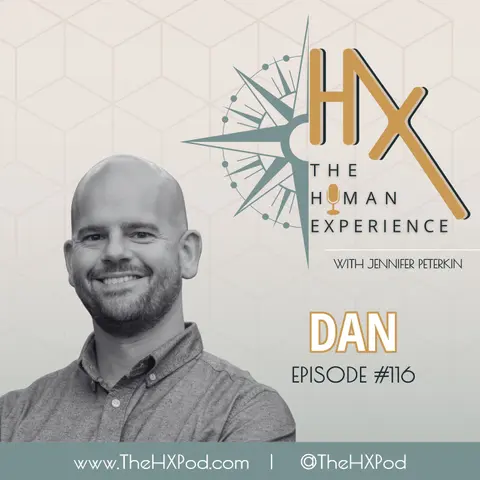
Everyone Is Worthwhile: Fighting Human Trafficking in Our Own Backyard | Dan Emr.

 Apple Podcasts

 Spotify

 Castro

 RSS Feed
Dan Emr’s story starts before he was born, with a piano teacher who asked a hurting 17-year-old boy what he believed he was worth. That boy became Dan’s father. That question shaped three generations: a family that left a comfortable life for post-Soviet Ukraine, and a son who later walked away from his engineering career to start Worthwhile, a nonprofit serving survivors of human trafficking.
Jennifer and Dan talk about growing up as a missionary kid in 1990s Ukraine, where he learned to be curious instead of judgmental. They talk about the day he saw a zero in his bank account and the check that arrived the same afternoon. They also cover the realities of trafficking that most of us get wrong.
This is a conversation about grace, about trust built one relationship at a time, and about how the difference we make is almost always measured in one person.
📍 This episode was recorded in Collegeville, Pennsylvania.
MEET DAN EMR
Dan Emr, Founder and Executive Director of Worthwhile, is a visionary leader with over 15 years of hands-on experience supporting survivors of human trafficking both in India and the U.S. His global upbringing in Ukraine, combined with a background in business, uniquely positions him to drive innovative solutions to one of society’s most pressing issues. Under his leadership, Worthwhile has launched groundbreaking initiatives, forged partnerships with over 200 social service agencies, and reaches more than 6,200,000 people annually through national awareness campaigns and speaking engagements. Committed to long-term impact, Dan has built Pennsylvania’s most comprehensive survivor support network, leading a team of over 130 staff and 3,000 volunteers who offer housing, employment, and restorative programs that empower survivors to reclaim their lives. His work is not just about advocacy. It’s about action, resilience, and real-world change. Through his expertise, passion, and powerful storytelling, Dan continues to inspire and mobilize communities to fight human trafficking.
CONNECT WITH DAN
KEY TAKEAWAYS
- One person can change the direction of a whole family. Some of Dan’s father’s siblings ended up in prison, and some died of overdoses. His father found another way because a piano teacher stopped to ask him about his worth. Dan says he “won the lottery” as a kid, and he traces that luck directly back to that teacher.
- Be curious, not judgmental. In Ukraine, Dan read an old Soviet textbook that said Americans rarely owned cars and struggled to find food. That was the reality he was looking at around him in Ukraine. It taught him that people believe what they’ve been shown, and that listening has to come before judging.
- Comfort and purpose are not the same thing. Dan had the career, two houses, and a $5,000 bike to ride to work, and none of it felt like enough. A question from his 10th-grade history teacher came back to him: if slavery were happening now, would you do something?
- Meet the practical need first. From his parents shipping hospital supplies into Ukraine to Worthwhile’s whole-person approach, Dan has seen that trust comes from asking what someone actually needs. One survivor told him she had been through 17 programs, and Worthwhile was the first that saw her as a person.
- Trafficking is a “here” problem. Most survivors Dan works with are U.S. citizens, and around 60% were trafficked by a family member. Many never say the word “trafficking.” They show up at homeless shelters and recovery centers instead, which is why educating those front-line providers matters so much.
- Getting out is the beginning, not the ending. Jennifer points out that the movie cuts to black at the rescue, but the real work starts after that. Dan tells survivors the voice of trauma may never fully go away, but they can learn to turn the volume down.
- We help because we’ve been shown grace. Dan’s late-night bareback ride on a runaway horse is funny, but his point isn’t. Most of us have walked away from a bad decision we didn’t deserve to walk away from. That should shape how we treat people who didn’t.
STAY CONNECTED
The Human Experience Podcast | Instagram | Facebook
The Legacy Experience | Instagram
Connect with Jennifer on Substack | LinkedIn
SEO KEYWORDS
human trafficking podcast, survivors of human trafficking, Worthwhile nonprofit, human trafficking in Pennsylvania, familial trafficking, trauma-informed care, missionary kid Ukraine, faith and calling, leaving corporate career for nonprofit, human trafficking prevention in schools, nonprofit founder story, everyone is worthwhile
0:00 Welcome to the Human Experience, a podcast about the stories we live out every day and the importance of championing the vulnerability and courage of the storyteller. I'm your host, Jennifer Peterkin, and it was through my own lived story of experiencing domestic violence that this podcast was created. By traveling the globe and interviewing each guest in person, I am convinced now more than ever, that stories have the power to change the world. Thank you for being here. In a world full of noise, to listen with intention is an act of resistance. Dan, thank you so much for having me in your office in college. Phil. So excited to be here and learn more about you and what you're doing in your story. Yeah, I'm happy to be here, and thanks for coming into the office to join me. I appreciate it.
0:49 Yeah, it's always so fun. I get the opportunity to come visit people in their. Their own space, and there is an extra layer of intimacy or specialness about that because I get to see you in your own. In your habitat. Right. So it's very cool. So if I ask you, where does your story begin? How would you answer that? That's. I feel like that should be an easy answer, but I feel like, well, we could go from the basics. Like, I was born in Portland, Oregon, grew up in the Philadelphia area, then grew up overseas, then back in Philly. But really, a lot of times when I share my story, I feel like part of my story has to be told through my. My story starts with a piano teacher. And some people might be like, well, what does that mean? And what I mean by that is a piano teacher in the sense of an actual piano teacher that intervened in the life of my father. And so my story wouldn't be where it is today without that piano teacher. And this is really kind of that testament to all of us have opportunity to make a difference.
1:52 Because my father, he grew up in a broken home with an abusive father who beat his mother, who he had to fight physically, who abused his family in a variety of ways. And he was a struggling teen, you know, who was gifted in music. And it was this piano teacher who asked those probing questions of, you know, your real value, your real worth. And in this piano teacher's, you know, lens and view was. Was through Christ and. And shared with him that gospel. And really, that was a turning point in my father's life where, you know, he had siblings that grew up in that same household who, some are in prison, some are dead from overdose, things like that. But my story, you know, my childhood, I would say I won the lottery as a kid. And because of. I can say that because of a piano teacher who was wanting to speak into the life of a 17 year old who was hurting. And so my story starts there really, in the story of how my father was kind of rescued from a place of hurt because someone intervened. And that also, you know, has that ripple effect to where I am today, running an organization called Worthwhile that serves survivors of human trafficking.
3:01 Wow. I love talking about how generations kind of affect each other. It's biblical, it's scientific. I mean, there is so much out there that speaks to the fact that we are impacted by the generations that come before us and we will impact the generations that come after us. So I think that's so cool. And I love when we can look into our own stories and our own lives and trace. Trace that back. Yeah. So your father obviously changed the trajectory of his life because of that piano teacher, which meant that you grew up not in the United States for a decent portion of your. Of your life. Yeah, yeah. My.
3:44 Yeah, my upbringing is a little bit different. You know, I was, I was born in Portland, Oregon, but I was only there for two months. Don't remember them. And then brought back to the Philly area. And growing up around here, like I said, I kind of won the jackpot because, you know, I was the youngest of four kids, so I had three older siblings and we had, you know, 18 acres of land. We had ponds I could go fishing in. We had a zip line I could go ziplining on with my, my older brothers and, you know, dirt bikes, all this fun stuff. And, and for me, it was, it was one of those things I'll never forget because they, you know, kind of family meeting, we're going to meet. After dinner, we sat down, we talked, and my parents presented to us like this idea of like, hey, all this stuff that we've given you is really fun, but it's not really what's important. And then they proceeded to say, this stuff's not important. We want to focus on what's eternal. And you know, I had grown up in a, in a home that was, you know, very faith focused and in the church.
4:40 But, you know, it's one thing to like, just talk about it or go to church is one thing, but to then see people actually put it into action. So those people being my parents, they said, you know, we want to go and help this country that's just come out from under communism and we want to help these people, they need help. And I think it's important and as you know, as I'm processing all this as a 12 year old, they said, we're going to go to this country called Ukraine. And all I'd known is every year we'd go on vacation to Cancun, Mexico. So I thought, hey, if this is like Cancun, Mexico, take me to the white sandy beaches of Ukraine. It was a little different than that as a little eye opening once I got there. But that was such an important and I think pivotal thing in my life, just how my parents took that step. My father worked for Production Financial, my mom was an ICU nurse, you know, and they really felt like this was something that was worth, worthy of, you know, quitting those jobs, selling our home that, you know, that jackpot lottery winning home. I would say not that we won the lottery, but it felt like that as a kid.
5:44 But then moving to, to growing up in a really a developing country because after communism, Ukraine was just really ravaged with poverty. There was a lot of alcoholism, there's a lot of brokenness, a lot of hurt, and there's a lot of interest in, you know, faith things because faith was kind of squelched and it wasn't allowed. And so, yeah, that for me, I would say that whole experience, I grew up there from the age of 12 to 18, really those formidable years and seeing a lot of things gave me new perspective, gave me new new lenses to see the world through. And I think really, you know, while in it, you know, from the age of 12 to maybe 15, if you asked me am I happy to be here, I'd probably say no. I miss my friends, I miss America, I miss pizza. You know, I miss all that stuff.
6:28 But you know, after some time there and then even now, I look back and it's like I'd never trade it for anything because I came back to the States with a whole new appreciation for all that we have. And yeah, I just feel like it's really helped me understand how good I have it and how blessed I am and how, you know, I just really have really nothing to, to complain for or want for. And yeah, I thank my parents for that. It was definitely a, a challenge, but something that informed me and even informed in many ways why and how I started worthwhile as an organization now almost 15 years ago. Wow. I feel like that is such a big pivot for your parents who were seemingly very established in professional careers and isn't always like the entry point for being a missionary. Like, do you know how they came to that decision?
7:25 Yeah, I don't Know fully. I mean I wasn't in their heads and I was a kid at the time. But I know, you know, as I shared like that piano teacher influenced my father's life, my, my grandparents, my mom's parents. You know, this is kind of like a generational thing because they also set an example. So my, my grandfather was a PhD in engineering. My grandmother was a concert violinist. He was from Germany, she was from Italy. They were here in the US the world, world was their oyster. Right. They could have done whatever they wanted because they're very intelligent people. And yet they decided they were going to go do missions work in Central America. And so, you know, this is now going back 80 years. They are 70 years. They went and started working in Central America. And he would build radio stations from the ground up.
8:10 So like literally, you know, from the Sears catalog, you could buy a brick kit to make a brick, to pack it, to kill it, to then build. And he would do that and he'd build the tall towers to broadcast radio. And it was radio, you know, predominantly that they were broadcasting was, was Christian radio stations. And that's where my mother was born in Costa Rica and her siblings all throughout Central America. And so that was what she grew up in. So that's what informed her is like seeing what her parents did and growing up on the mission field as well was a big thing that helped encourage her and, and wanting to do more and just, you know, she had kind of, you know, gone down that career path as many of us do and should, you know, we should have careers. It's not wrong too. But that was something that was kind of like that, that draw for her to do more. And then for my father was just kind of, you know, the same, similar and that he just experienced that life changing encounter essentially through the, what was shared from that piano teacher to where he was like there's, there's definitely something more. And I feel like that's where I've come to be in my journey is just seeing the extent of hurt that we as humans can do to each other in the, in the realm of trafficking, exploitation, the abuse, the harm that's caused. But then I also see the restoration that can happen. And there's restoration that happens where people heal and then there's people that go a next level of healing. And that's where I think they, where I see that is when they truly recognize their worth and not just what they see in the mirror. Because you know, if I woke up and I saw this in
9:43 the mirror, I'd Be pretty disappointed because it's all, I mean, if this is all that there is. Oh, well. But I mean, knowing that there's more to myself and for those that we serve, helping them recognize that as well. And it's not a requirement, it's not a prerequisite to be part of the programs, but it's one of those things where it just, it unlocks that understanding that there is a deeper value that we all hold. And that's really the premise and kind of an underlying foundational piece of our organization. Yeah, that's so cool. I mean, it really is a, an inheritance almost this, this lifestyle for you, having your grandparents and your parents be so plugged in to this way of thinking, in this way of living life.
10:26 So talk to me about actually arriving in Ukraine, because having seen spent, I'm guessing this is the 90s. Yeah. Okay. Yep, early 90s. So I've spent a pretty significant amount of time in Romania, but It wasn't until the 2010s. Okay. And even still, it was a jarring experience visiting a post communist country and realizing the fallout from these years of abuse and terrible conditions that people were living in and how there seemed to just be a lack of trust in systems in other people. That I think is totally valid. There was also a warmth once you got to know people. And so I'm just really curious kind of being on the front end of that right after communism ends there. What, what was that like as a kid to kind of walk into that country? Yeah, yeah, it was, it was completely foreign. I mean it like if you can envision what it'd be like to be an actual alien from outer space, it kind of was like that because there's things that like, yes, we're eating food, but very different food. Yes, we're, we're living on a street, but it was a mud street.
11:44 You know, these are all. Everything was so foreign to me. But more so than that was like what was instilled in them during communism was like America was bad. Right. So we come in as Americans and Ukraine was actually wanted to be liberated from under communism. So we were received. But there was a lot of, you know, not really sure if we could be trusted. There was a lot of rumors being spread, you know, just, just a lot of things that you had to kind of overcome just to build that trust. And you know, again, I was kind of fortunate in that I lived in naivete of being a 12 year old. I'm like, I'm just going to be friends. I could care less Other kids my age could probably care less, and we just kind of got along. But, yeah, I mean, for me, part of that informed view is, you know, recognizing what I was growing up in was very different than what I had here, you know, And I remember when we were studying the Russian language, you know, my family, my siblings were far more diligent than I were, that we had a teacher come to our house, and she would teach us Russian. I would try to do that, but I'd go out in the street and play with my friends, and that's how I learned Russian. And at the time, that's what the language was, because they came out from under communism, so Russian was the mandated language.
12:48 And then over time, we switched back to Ukrainian. But I remember the Russian teacher, Nadezhza, she would bring this book in from. It was a book that was teaching English in the Communist schools. And we were reading through it, and I just. We were just, like, laughing because it was saying, you know, you know, in America, it is very uncommon for someone to have a vehicle, and there's very few places where they can get food. And it's just all this, like, propaganda. I'm like, this is really interesting. And so there was a lot of things, misinformation, things like that. We just have to share people. And it was by far the complete opposite. Like, there, when I got there, was very rare for a family to have a car. Food was scarce. And yet that's what they're saying about us in our country. So there's things like that that I'm like, man, it's like we. We don't always know what information people are getting. And so, again, having that. That mindset of, I'm not going to judge, trying to listen, you know, trying to. To understand. Walt Whitman, one of our Philly favorites, you know, he had this saying of be curious, not judgmental. And I think for me, that was kind of an understanding.
13:53 Like, it would be easy to judge people because you're like, well, this is stupid, but if that's all they ever saw, that's what they would believe. And so for us, it was a lot of those things that I had to learn. And, you know, also, it was just like, for me, was a lot of. Not that my parents, they. I jokingly, we had dinner last night with my mom, and I said, you know, my. My kids and my nieces and nephews were all there, and we were having dinner, and they're saying, you know what, man? You were given a lot of freedom. Like, I don't Know if I was given freedom or I was just forgotten because I was the youngest. But I would go out on adventures in Ukraine, and some of those being barring the family car at age 14, when I shouldn't have been driving and driving around town because I had to go to the mechanic to pick up a part for my dirt bike. And along the way I was driving through the street and this guy who was highly intoxicated wanders in front of the car. And most parents would probably advise him, I'm sure my did too is don't engage with drunk people on the road. And I stopped instead and said, can I help you?
14:53 And he walks up and grabs the door and, and like leans his head in the window reeking of alcohol and he's just, just mumbling and stumbling. And then the next thing you know, I offered as a 14 year old, like, we'll get in and I'll take you where you need to go. This is my first Uber experience. And so he climbs in the backseat and then as we're driving, he just starts sharing about how he, and it is all in Russian, sharing how he wants to kill himself. He feels like he has no hope, he's lost. And then as I'm processing through as a kid, I'm just like, what I had seen, what I'd grown up around is when you invest in people, you find purpose. So my 14 year old therapy self was like, hey, you know, how do you help people? And I just started to encourage him, like to try and find, you know, meaning and purpose and helping people because again, that ripple effect of seeing my grandparents, my parents and, and now me as an illegal, you know, 14 year old, driving on the streets of Ukraine, trying to, you know, you know, tax, taxi, cab, confessional, this guy into understanding value and worth. I figured out where he needed to go, dropped him off. And I still like one of those memories.
15:58 Like I don't know where he ended, you know, I don't know if he found value, but I, I felt like I always look back at that moment. I was like, that was one of those where I got to see, you know, when, when really pressed, when we're, we're put into difficult situations or hard situations, what you're filled with is what comes out. And so those were truths that were true to me at 14. And when in a weird situation with a drunk guy who was, you know, probably three times my age in the back seat, you know, the, the truth that I felt was that we need to invest in people. And I remember that, you know, so things like that. There are many more stories that I probably share, we don't have time for. But that was one that I always look back as like, you know, a pivotal moment where I just, I felt the real me, like understanding what was important to me be put to the test. And when pressed and when in the moment, that's what I saw as valuable to encourage someone.
16:50 And, and yeah, it was a. And you know, growing up in Ukraine, again, I said it already, but I never would take it back because it's something that really helped me as a person grow. Yeah, totally. What did your parents actually go over for specifically or I guess were they allowed to go over and say, hey, we're Christian missionaries or was it more secretive than that? Yeah, so we went. Two, two reasons we went over. One was kind of the, the guys we went, the guys we went under to to get in was to. For humanitarian aid, which we did do. So my mom being an ICU nurse, she worked with a lot of the local hospitals. And I remember, you know, here in the US I was packing 40 foot containers of medical supplies, hospital supplies. And when we went over there, I mean it couldn't have been more needed, you know, just by seeing it. And I saw it firsthand too, when we'd go into the hospitals to take the supplies in, you'd see, you know, the situation back then and AIDS was running rather rampant because of misunderstanding or not knowing how it was spread. And so like when they would use needles for transfusions or injections, they would reuse them. And so we brought over that hospital beds, things like that. So that was one of the main purposes and one of the things that we did fulfill. And then the other part was to just bring that, that same life changing thing that helped my father and pivot to a new found value and worth was to bring that message to people there that you have much more value than what you maybe
18:23 believe or what you've been allowed to believe. And that's through sharing the gospel and that was through doing missions work. And So I think 10 churches were started and a little Bible institute that was accredited through the US and you know, again, your listeners may or may not have the same faith standpoint, but I think they could appreciate that when you go with a mindset of I'm here to serve you, I'm here to help you, that's where you know, our focus really was. It's not, you know, we're here to make you believe just the same thing I'm believing. But they're really to understand that there's a value there, too. And then one of the things I love, too, is that that work was started, you know, over 30 years now ago. And my father, he's passed away now 23 years, but that work still continues. And, you know, a lot of times when people will ask me like, wow, you really, you know, worthwhile is impressive.
19:17 Did you ever think it'd get to this? Or how did it get to that point? And I'll share, like, I, I really stole from my dad. Like, his. His mindset was like, let me build good structures, good systems, and then input or incorporate capable people to continue it forward. So that when he passed away, all that still continued on. And even through the war that's been happening, I'm still in touch with my friends. Some of my friends are on the front lines fighting. I just talked to my friend Roma last week. We were exchanging pictures, and he was showing the car that he was in that got hit by a roadside bomb. He said we all were okay. And, you know, he grew up with these kids. We were teenagers playing on the streets. And now I'm thinking, like, he's my buddy and on the front lines fighting. It's. That's scary too.
20:02 But, like, he was sharing pictures from. We were growing up and, and it was just cool, like, seeing now that impact of, you know, he, he. To this day, we have a friendship because of that value. And that. That was like our focus of, of instilling that worth and value. So I kind of got off track. Sorry. But like, the, The. The. The desire to go there was to help people and, and, and equip them through medical supplies, but also help them understand their eternal value. That really informed a lot of. When starting worthwhile was so important. Like, and I share that with people. The reason it is where it is today is because it never was about me. It's never supposed to be about me. It's supposed to be building a healthy system, healthy people.
20:45 You know, in, in 2012 is when I started, you know, worthwhile and as a staff of one myself. And now, you know, we have about 130 staff providing services all over. And we have regular meetings with our teams and we go over our core values and the mindset, you know, that we all have value is one of those core values. The other one is that we must have humility and grace, and that's, you know, understanding that not everyone's going to see through the same lens that we see through. They're going to be affected by Trauma, they may be affected by hurt, they may be affected, you know, by different beliefs and systems and structures they grew up in. And to have that, that mindset of be curious, like, why do they believe what they believe?
21:29 Let's understand it, not judgmental. And so, yeah, because of those things, we get to do what we do today and have the impact we have. Awesome. I think it's so important, especially for Westerners who don't, haven't lived under these systems of oppression, to be careful in how we view help towards other people. And so hearing that your parents, your family really addressed practical needs of people, you know, they addressed spiritual needs of people and emotional needs of people, which are extremely important as well. But when we're not addressing practical needs of people, it can be really difficult to hear the other stuff.
22:19 And so I think sometimes for those of us that have never been in a system where we don't need those practical needs met because we are, they already are met. It can seem a little bit weird to us that that is the focus or that's the immediate focus. But I think that's what builds trust, that's what builds relationship, is seeing somebody and saying, what is it that you actually need from me? How can I be of practical help to you in a way that will make your life better today? And giving the tangibles. And so I think that is a wonderful expression of love to, to be able to meet needs in that way. Yeah. And that, I mean that rolls right into like the foundation of like that's you're describing worthwhile too.
23:07 Like when we talk about what we do as an organization and serving survivors of human trafficking, we, and it's, it's like ingrained in all of us. Like we're not here just to do one thing. Because when you're dealing with individuals that have been exploited and have been abused and traumatized over and over again, you need to address that, but you can't forego all the others. And so our programs and all the work that we do is focused on the holistic approach, that whole person approach. And so that's, you know, where we see that significant healing come into play is when you are willing to address all those things. And where you don't have the equipment or the, the experience or the ability to do it, you find a partner to work with you to do that. And that's where, you know, we've heard from survivors.
23:49 I remember one survivor after she went through all of our programs. You know, she's, she's been our purpose for years. Now and we still have, you know, relationship where we talk. And she's like, Dan, I was like in 17 other programs, she's like worthwhile. Was the only one that like saw me for the individual and focused on, on my needs and, and that made me very happy to hear because like that's what we're striving for. I think we sometimes there's A great quote, C.S. lewis, great author. We know he wrote this space trilogy. So let the nerd self of me kind of shine a little bit here. But the space trilogy, the first book is called out of the Silent Planet. And this main character is. He's on this other planet. He's talking to like this angelic alien being, whatever.
24:31 And the alien being says, we have a law to never speak of sizes or numbers to you because it makes you give reverence to the nothing and pass by what is really great. And I thought, man, he nailed it. C.S. lewis nailed it. Because we do, we get so focused sometimes on the numbers and the big and the glorious things that distract us or pull us away from, pull our attention away from the important thing, which is sometimes the individual or oftentimes it is the individual. That's what we need to focus on. And when we forget the individual, we pass by what's really great. And that's where I think that again, there are focus, I like to say, is very different in that regard because we do make it very individualized in our approach, making sure that they are seen, that they are heard, that they're not passed by. Wonderful. I love that you brought up C.S. lewis. So what's, what was your inspiration then? I mean you leave Ukraine at 18 and then in 2012 you start worthwhile.
25:29 What is kind of happening in between there to, to get you to this place? Yeah, life happened, you know, I started, started down the path of, you know, living life. So I came back to the States, went to college, met a girl and you know, my wife and I are married now 20 years with a 19 year old son and a 15 year old daughter. Wow. And yeah, so when we, when this all kind of came about, I had gotten a career job, you know, pretty much right out of college. One that you'd be thrilled to have it paid, paid well. I worked for an engineering firm and you know, it afforded us a house in Florida, one in Pennsylvania. I had one of those obnoxiously expensive carbon fiber bikes I'd ride to work. It's like $5,000 bike that I'd ride to work.
26:11 And it was during that time you know, like, it's kind of pursuing the American dream, or we're told this idea of like, go get a good job, make lots of money, buy lots of stuff, and you'll feel fulfilled. Right. And I had lived a very different life. So I started going down that path and I'm like, I don't know if I feel fulfilled. I don't know if that whole American dream is really all it's cut out to be. And it was at that time that I had learned about human trafficking. I was at church and it was totally not on my radar. I wasn't even aware that it existed. And this young couple came and they started sharing about, you know, modern day slavery. And they were working in Cambodia and helping these, these women and girls that were being forced into brothels. And it really just like struck me at my core of like, well, what do I do now? Like, this was just.
26:56 I couldn't, I couldn't live with the fact that this was happening to people. And so I went up to them afterwards and talked to them and said, what can I do to help you? And they were, part of what they were doing is providing employment there through the making of clothing. So they'd provide aftercare services and then offer employment. And so I was like, well, I can help you do that. So I kind of pulled my brother in on this. And we were working on getting a large order of shirts that they could do, about 2,500 shirts. And then really like at that very end, when they were supposed to start fulfilling that order, the whole organization shut down. You know, not to the fault of the couple that had came and shared, but the organization shut down. And then I was kind of left with the fact of, like, what do I do? So I worked with them for about a year, kind of to that point. And then that all that opportunity, that door closed. And then I was like, what do I do? And it really, it kind of evoked this memory from an earlier. Like at 1, for my 10th grade year, I came back to the States for a little bit and I was in a history class at my school and the history teacher had asked a question, you know, just kind of, I guess, probably not thinking it would have such, such an impact, but the question was, you know, students, if you lived here in America when slavery was happening, would you have done something to intervene? Would you have done something to stop it? And so, you know, as a 10th grader, I raised my hand and he's like, well, why would you, Dan? What would you, why would you do that why would you intervene? I said, well, I believe everybody's, you know, worthy of dignity and respect and being treated equal. And so that's why I would do something. And so fast forward all these years later, I'm hearing about human trafficking, modern day slavery, and I'm
28:26 like, well, what do I do? This, this other organization shut down and that is what led me down this path. And you know, ultimately, you know, cashing it all in to quit that job and started worthwhile and started our work first in India and kind of mimicked and modeled what they, this young couple was doing by providing employment through the making of clothing and then providing aftercare services. So, you know, good ideas are worth borrowing. So I started down that path. But it was, yeah, not a great career move. It was one of those that was challenging. My, My son was 4 or 5. I can't do the math at the time. My daughter's like two. So it was, it was definitely a challenge. It was, it was not an easy thing. You can ask my wife, she's the same. But now, all these years later, you know, I still see the value in it and I, I'm grateful I did it. And it's something that I wouldn't change, you know, given the chance.
29:18 It's. That's given my life, you know, more purpose. And that's really understanding too. Like that purpose is found in people, you know, not in stuff and things. And that's something I try and still in my kids, but also in those that we serve. Like, you know, there's a quote, and I forget who said it that I can't give the credit to, but it's this idea of love. People use stuff. Never confuse the two. And I think we live in a culture that sometimes loves stuff and uses people. And that's really the work we're in is people are used. And so, you know, that's fortunately where I get to say my work is to counter that, to help people understand that they are loved. Wow. I love that that quote is, is very powerful in its simplicity because that is very much describes our culture and our society now.
30:07 I think we're all kind of capable of really numbing ourselves to people and wanting that more, more and more lifestyle. And I think our culture reinforces that for us in what it values. Social media reinforces. Oh, gosh, yeah, it's like, I mean, that's, that's what we're, we're. I mean, we're kind of cultivated to do this, like, put on the best picture of. Yeah. Who we are. And we try to show that to everybody. And. Yeah, I don't know. I guess I don't know if it's doing this work for so long and hearing so much hurt. It's like I've become very comfortable. Like, this is me, the good, the bad, the ugly. And the me you get here is the me you get at home. And I just seen really focusing on people and recognizing, you know, that that's the priority. It lessens all the other worries, you know, because of. At the end of the day, whether, you know, I could. I could live in a mansion or I could live in a cardboard box. If I still have the mindset of people matter, I think I'll still have purpose. So that's, you know, for me, it's like I'll.
31:07 I'll. I'm happy with what I have and what I don't have. Yeah, just trying to have that mindset of, you know, having that open hand mindset. Like the things that I've been given, I receive them, I'm grateful for them, but they're taken away. Corey ten Boom said that. She says it's easier for my hand if I hold things with an open hand so they don't have to be pride from them. That's really something that I feel I've learned to adopt over time. And really the first eight years of running Worthwhile man, it was like there was zero in the bank account. And it was scary because it went from having stuff and having funds. And I remember that first time, you know, here we'd sold everything. We're about two years in, we're now, you know, we had a church that was very gracious, let us stay in there in their church parsonage. And I remember getting the mail the one day. And right before going outside to get the mail, I was looking at my computer and I took a screenshot of it because it was the first time I had seen a zero in our bank account.
32:03 And I remember the feeling I had was more so probably, if I'm being honest, was anger towards God. Because I was like, here I've done all the things I'm supposed to do. I feel like I'm committed, I'm going, I'm trusting, you know, trying to set an example. And I'm also now overwhelmed with this, you know, in print. It's very small, but felt like an enormous number, enormous, you know, overwhelming void of, you know, I didn't have a way to support my family, my two very young kids, my wife. And I was just angry And I'm just like, here. I feel like you. You promised all these things, you know. Again, I don't know those that. That are listening, whether they read the Bible or not, but in there, there's a verse in Matthew how he provides for you.
32:47 And I was thinking, okay, I'm gonna, you know, step out in faith, I'm gonna follow, he's gonna provide. And I, in that moment, did not feel that way. So I was very frustrated and angry. And then I went out to, like, kind of take my mind off it to get the mail. And I went out, bring it back in. Of course, there's junk mail in there, some bills, which really felt, you know, like a salt on a wound. And then there was another letter in there. It had my name on it. I opened it up, and in there was a check for $10,000 with my name on it. And my grandmother had passed away months prior, and I had no idea that there was an inheritance and that I was to receive it. And I. And I. And I know, like, I don't think I know that that was intentional. Like, I feel like for me, that was a God thing. Like, I just want you to recognize in those moments when you are in the. In the need of most, you know, I will provide. And for the.
33:36 For me, and again, it's. This has been a learning experience along the way and doing this work as long as I have, there's been many opportunities for that where I. I now am like, okay, I need to just trust. And so one of the. The biggest things that's come out of this is not only, you know, for. For the impact, right? So when people say what impact has worthwhile had, I can share the statistics and numbers of the hundreds and of. Of individuals we serve every year, the thousands we've served over the course of 15 years. But personally, for me, man, my faith is like, is to another level because I. And again, I guess there's no way around it but to live it, right? And when you are in these moments where you're like, I'm just without. And then he comes through, and then I'm without again, and then I have it again.
34:23 And so I can't speak for everybody because everyone has different experiences, but I know for me, there's been so many times where I've been like, I'm just going to trust and then it'll come through. And there's been, you know, so many times when I've been terrified. Like, I don't know how it's going to happen to now. Where I've gotten to the point and I'm like, I'm just going to be creative. Let's see how he'll provide. And the other is last, last month. So not long ago I was, sorry, it was two months ago whenever school let out because we're in the summer now. But I was driving my daughter to school and I said to her, I said, you know, right now, you know, worthwhile, you know, we have, we, we operate thrift stores as well. They fund us and we have donors that give. And for whatever reason, I said, this is the first time I've had to, you know, borrow money to fund our work, which is, really hasn't happened in a long time. So I'm using a line of credit. And I tell my 15 year old daughter, I said, you know, what's funny is in years past I'd be really, really anxious and nervous and this time I'm not. And I tell her, I said, you know, what's curious to me is like I've learned when these moments come is not to be afraid, but to be curious or intrigued and just wondering how God's going to provide again. And so I just tell her that and I'm like, so I'm just curious. And so three days later I tell her, I go, remember how I had that conversation with you three days ago? I said, since then I've had two organizations reach out, two foundations, and they both have committed to give over $200,000. And I said, yeah, so I'm like, I said, so remember that conversation, remember that for the future. And I said, so that that type of stuff has continued to
35:55 happen. And I just, and it's. So I need to clarify, it's not because we're, we're being flippant with how money is used. We're very, you know, mindful. We have, we have, we have accountants, we manage stuff. But it's when those things, sometimes I think it's, we're led down these, you know, we're, we're allowed to experience those moments, to guess, you know, relive that faith. Because faith, the only way you experience faith is if you, you allow, you know, you have to live through those moments. You have to trust in those moments. And so I've had that experience time and time again and it's been one of those where, yeah, I feel like I just have, have learned to trust and wait to see how he'll provide. And again, I can't speak for everybody, but that's been my, my story, my experience. So Cool.
36:40 So you said you started in India and you modeled after that other organization. So am I assuming, right, that when people are rescued out of human trafficking, you provide source of income and stability for them? Like, what is the program function for you? And is it all overseas? No. Great question. So we. We started in India, but right after starting in India, I met a survivor of trafficking here in the US she, you know, more or less kind of sat me down. We were. We were sitting around a table at a coffee house, and she just shared her story. And she shared how she. At the age of eight, you know, she was a.
37:24 How she termed it was like a latchkey kid, meaning she didn't have a dad, her mom was at work, so she had a key to come home after school. And one of those days, coming in from school, you know, her neighbor came over and said, can you help me find my lost puppy? Air quotes. Lost puppy. And so she started to help him, and he lured her into his apartment, and then he proceeded to sell her to men in the area. And it happened for many months. And she continued to go back because he had threatened, if you don't, I'll kill your little sister. And she shares this with me and saying, this is what's happened. This is what's in our area, and I'm not the only one. And she proceeds to say, you know, I asked the question, like. Like, what would you need?
38:08 What would have helped you in healing? And she, you know, just very openly shared, like, there was no resources, there was no programs. And so we started our work in India and then, you know, quickly said, okay, we also need to address this here in the US because as an organization, you know, the goal, kind of the foundation of who we are as an organization is to reach and serve as many as we can, wherever the need is. And so in India, we started down the path of providing the employment piece, providing, you know, we modeled the clothing parts so making, producing clothing, and then aftercare services. And then in the US we said, okay, we need to provide, you know, what is needed based on what the survivors are telling us, which is stability, housing, employment, in addition to the trauma counseling and all those things.
38:55 Things. And so as we're exploring that, another pivot moment, you know, in India was I had just finished our clothing center. I'd worked with, you know, architects and. And, you know, engineers to design this clothing center, which was. We basically repurposed a building and outfit with all the sewing machines and started, just started employment. And my US Employee who was running that, she calls Me. And she's like, hey, I can't get into the facility. I'm like, what do you mean you can't get it? She's like, like, my key's not working on any of the locks. And here. The owner of the property loved all this work that we'd done, all the renovations that they just changed the locks on us. And I was here working on, you know, developing, you know, our programs here. And I meant like, flew back to India, tried to negotiate with them and came up basically empty handed.
39:43 So we were working on multiple things at once of trying to figure out a solution here in the US and, and now, you know, the program in India taking this huge blow because not only had done all this fundraising and work and flying back and forth, you know, being away from my wife and kids, my wife was diagnosed with type 1 diabetes, which was like a new, you know, curveball thrown our way, but a huge blow for her personally, like trying to deal with that. And that was, you know, makes it hard to travel, things like that. So anyways, we were navigating through all that and in India we just said, okay, we'll find a new way to serve these women. So we pivoted and, you know, just, I found new partners and was working with them. And then here in the US we said, you know, if, if what you're saying, you know, this was one survivor, but then talking to other survivors, you know, is you need stability and housing. We started walking down that path.
40:34 And you know, I spent like six months looking for, you know, a property, like trying to find something that would work. And I, I spent, I mean, every day basically for, you know, six months. At some point during the day I was calling someone that I thought maybe has a spare house or calling a church or an organization. And I had this one. All of them were news. No one, no one was coming through. And I was just kind of like, okay, now what? And I had one option left on the table. And I went and met with this church and this was like my second meeting with them and it was all looking good. They had a parsonage, they had, you know, a quarter of an acre with it. And I'm like, great. And so I go back for the follow up meeting and they proceeded to tell me, why should we sign an agreement with another organization? Because I was the, I was the little fish in the pond, sure. And, and so that fell through and I remember just again being frustrated.
41:22 So part of my story has a lot of frustration, maybe anger, I don't know, but Being frustrated. And I was like. I, like, didn't know what to do. And so it was like. I think it was like, the next day, my. My mom, she lives out of state. She texted me. No context, just text. Proverbs 16, 9, it says in that verse. It says, a man plans in his heart, but the Lord directs his steps. And so I'm like. I just applied it. And I'm like, all right, well, right now, this is where I feel like the priority is. And I'm like, all right. I'm hands off. Like, God, this is yours. If you want it to happen, make it happen. I'm done. Like. And I said, I'm done. Not, like, willing to wait. I was just like, I'm done. This is stupid. I'm wasting my time. And three days after that, I got a call from a local, the district director for two of our counties in our area, for Bucks in Montgomery County. And she's like, yeah, I've been hearing that you guys are trying to start housing program. The local congressman would like to meet with you.
42:15 So I'm like, all right. So we go meet, and I meet with him, the county commissioner, a couple other people, and I'm just. I kind of go in with a little bit of the bad attitude because I'm. I'm frustrated. I'm like, whatever. This is a photo op for you guys. Good for you. Whatever. You'll hear this. You'll shake my hand, take a picture. We'll all be on our way. And so during that meeting, I'm sharing what we're trying to do, what we're. What the need is. And the congressman, you know, the first thing he says, well, we can't fund you. I'm like, no, duh. Thanks a lot. And, like, he's like, we can't fund you because your program doesn't exist. And I'm like, yeah. And so, again, I'm kind of irritated, but putting on the nice smiley face and just like, okay, so I'm expecting the meeting to wrap. And then he says the next thing, he's like, well, the county actually owns some properties. It could it be possible that maybe one of those could be used by you? I'm like, well, yeah, I mean, that sounds like that could work. And so he tells the county commissioner to send me over a list of the properties that the county owns. And they have a list of. It was, like, 17 homes on there that they owned, and only one of them is listed as available, and only one home was listed as a group home. Happened to be the same home.
43:16 And so I'm like, all right, let's go there. So I go meet the county commissioner there and I'm looking at this property, I'm like, okay, it's a little rough. It sat vacant for like 11 years and but it was owned as a group home. And I'm looking at this and I'm like, you know, there's a lot of potential. There's a big old farmhouse, another building on it, an old barn that could be converted and to use for something. And I said, you know, like, I don't have much budget. You guys aren't willing to fund it, what's this going to cost us? And he's like, well, if you guys are willing to do this and there's a need in our community and you're going to get the community to support you and the women that you're serving, we'll do a 29 year lease for a dollar. And I was like, yeah. And I reached for my wallet and he's like, he's like, no, you don't actually need to pay now.
43:58 And it wasn't just that, it was, I was looking for properties that had maybe an acre, maybe three acres. I was really being ambitious. This said 82 acres of land and today it's been an operation for 13 years, you know, serving survivors, providing that long term housing that that first survivor told me that they needed. And we, you know, from the communities around us, they came out, they helped us renovate this dilapidated building. The barn we converted into an education and counseling center. And we've been serving, you know, survivors through that for, for years now, over a decade. And yeah, again it's that moment where my faith grew. Again I'm like, okay. And so, you know, we offer those programs. And so when we started it was India, the housing and then in conjunction with the housing was working to provide the sustainable piece. So we in, in tandem, we were renovating that home in September of 2012, 2013. And then in the same time in November. After that we started renovating the first store, Worthwhile Thrift store. So that when individuals, women that we were serving in the housing program, which is called the well, while they're being served at the well, they could also have employment at worthwhile Thrift and have the sustainability piece.
45:10 So that's where we started with programs. We have several other programs now. But that's kind of the, the, you know, the, the starting point of worthwhile. Wow. And the. Did the idea for the thrift come? Because I mean, obviously we don't manufacture clothing in the same way here. So it was kind of all along the same lines of. Of work in. In that it was in the clothing, but it was a way for people to have jobs, essentially. Yeah. And. And to be frank, I stole the idea. Right. So that's okay. Yeah, I was. Yeah. And again, I think I. I go back like that, that verse where it says, you know, the. We plan, but the. The steps are kind of directed for me. I. Yeah. A couple years prior, I was serving on a board of directors for an organization called Liberty Ministries, and they were helping men that had been incarcerated come out, you get reestablished, and. And find their feet again and kind of get going. And I was in my 20s as board chair, served there for six years. I was ambitious. I don't know. I think.
46:11 I think they were foolish in choosing, but. But I did my best. I did my. I learned a lot through that. But in doing that, they. They did that. They provided housing and they provided employment through thrift stores. I'm like, I see this. It works. So I. And when we started here in the US With Worthwhile, I'm like, that makes sense to do that. And it's. It's a beautiful thing because we have three stores now, and they're, you know, not your traditional thrift stores. They're like, you know, 30,000, 40,000 square foot, like a, you know, Walmart or Target. I know I pulled up and I was like, this is huge. Yeah. Yeah. And so it's that the stores, you know, they provide that employment piece for those in our programs. But the other thing that I found over time is that they. They really are like beacons in our community. Like, if you were envisioning, you know, looking across the landscape of a town, you know, and I really feel like the stores are like that beacon shooting up, because that's where people go when they know what they're giving towards.
47:04 They know how it's impacting others lives. And even people in need will come to the stores and say, hey, I need help. And our staff is trained to direct them to either programs that we offer or other programs in the community. And, yeah, so that's where the impetus was kind of the starting point for the stores is because I saw it worked, just did that. Why recreate the wheel? Absolutely. I 100% agree. And honestly, who would have known that thrifting would become this, like, cultural phenomenon either? I mean, they've always existed, but for the past 10 years or so, it's been the cool thing to do. Is to thrift. So you really got a market there.
47:44 Yeah, yeah. And we use it as a, you know, that, that beacon element too, is like, it helps. We want to tell the story of what we do and why we do it. And so it serves as a great way to inform our community of this issue of human trafficking. And then on the back walls and the walls of our stores, we always have like a large mural. And it's quotes from survivors that have gone through our programs because, you know, a lot of times it's kind of like a cliche, like where people say, I want your voice to be heard, and then they do nothing with it while we really try to live by that. So we have survivors that will write quotes and share, you know, a testimony or something. And those get incorporated into the murals in our building. So when people walk in, you know, it might be a message that one person needs to read and see that day because of what they've experienced. And for others, it might be like, oh, now I know what I'm supporting. And that's another way that we have those stories be like beacons in our communities.
48:36 Yeah, lovely. How do people find you? How do you get connected with survivors? Yeah, it's a variety of ways. You know, we work a lot with law enforcement. You know, I think a lot of times people think of anti trafficking organizations, they think of like kicking down doors, you know, rescuing, you know, that's not our place. It's for law enforcement to do that. So we work with local area law enforcement, with FBI, and we get referrals through them. We also have a lot of organizations, social service providers. We work with about 180 different social service providers in the greater Philadelphia area. And the reason we do that is because a lot of times someone that's escaping trafficking, you know, they don't know where to go and they won't leave a bad situation like that and say, I'm a survivor of trafficking. They say, I'm homeless and they go to a homeless shelter or I have an addiction, they go to a recovery center. And so our team does a phenomenal job of going out and presenting at these locations all year long. They're just constantly on rotation going to different social service providers to, number one, educate the staff on, you know, this is what trafficking looks like, indicators of trafficking. And the staff, you know, to the one, everyone will be like, oh, my goodness, we're serving survivors of human trafficking based on what you're sharing. And then we have the opportunity to share to the individuals, the clients that they serve of what trafficking look like. And that rolls into our outreach program.
49:56 So we run a program called Worth it, which is a multi week program. It runs in a variety of areas. Sometimes we host it in a recovery center or we host it in a prison, or we host it maybe off site at a church or community center where the individuals come to us and we, we do a really deep dive on what exploitation looks like. We spend a lot of time in all of our programs, our housing program, our outreach programs on understanding trauma. Because when you're working with individuals that have been trafficked, it's, it's a different animal, the type of trauma that they're dealing with. And, and I think it's, you know, it's safe to say all of us have trauma of some form or another. But when you're working with individuals and here in the U.S. survivors are trafficking are predominantly U.S.
50:42 citizens trafficked by other U.S. citizens. And then, you know, the sad statistic is, you know, that, you know, 60% of those that we serve will say it was through a family member that they were trafficked. And so that creates a very complex form of trauma. And so our Worth it program does a really good job of unpacking that, normalizing it, helping those individuals feel like they're not alone. Because trauma has this nasty habit of number one, creating self blame that you're the reason it happened. And then number two, isolating and making us feel like we're all alone in this. And so we've seen it time and time again. Our Worth it program, you know, I'm really proud of it. I feel like it's one of those things that we hear from the, those we serve say I've never been in a program like this. I've never had something really focused on that core hurt that's caused these maladaptive behaviors, these things that caused me to repeat, to end up in jail again, things like that.
51:36 And you know, not to fault all the other social service providers out there. They're doing work that's necessary. But a lot of times we fund or we, we help organizations that are doing things that we can see, meaning, like you see someone that's homeless, you provide a house, so it's an addiction, provide recovery. But we don't address the reason why it keeps happening. And so our focus really is to address the, the why and helping them understand that trauma is a real thing. It affects your, your, your health, it affects your mind, it affects your decisions. And so helping them recognize that is, and not just recognize it, but then Begin to work on it is one of the key turning points for so many of those that we serve. And so that Worth it program is having great impact. It serves women, we serve men.
52:22 We also serve youth through that. So worth it for women, worth it for men, worth it for youth. Wow, that's amazing. I feel like there's a lot of things that I relate to in what you're saying from a domestic violence advocacy point of view, in the shame aspect of things, the guilt aspect of that trauma. And so I'm curious, because one of the things that we see in domestic violence advocacy is that there are people that don't even realize that they're in these abusive relationships, that they are being abused. It's not what they would call it because, you know, there's multiple reasons. One of them is that the behavior is so normalized. Is that something that happens where people don't even realize what's happening to them or don't have a name for what's happening to them?
53:10 Yeah, yeah. I mean, one of the things that's sad is, like, sometimes you'll be working with individuals, and it's like they see it as the norm. Like, that's normal. Right. And they almost would be surprised to know another world exists outside of that. So that's the number one hurdle, is that you just have individuals that are not even aware that a light life without abuse is possible. And then the effects, oftentimes of trauma on the brain can be another huge factor to overcome, because you have Stockholm syndrome, which is that you gravitate towards or fall in love with or want to be with that abuser. And that's one of the things we actually have to work really hard with.
53:52 Those in our housing program, that's part of that first 30 days is kind of working to break ties with those that have exploited them, with those that have led towards their exploitation. And so, yeah, that. That whole shift for them is very challenging. And the reality too, is, like, even though the change that we're proposing is good change, change is scary. And so that oftentimes can be the hurdle that maybe even is the biggest hurdle. It's like just trying to get someone to. To change from where they are to where they can be. And what we've seen though, too, is once they've gotten out of that situation, then it's like, oh, my goodness, like. Like, I didn't even know. You know, they just are living in this, unaware that this is not normal or it shouldn't be normal. And so once they're out of it, then they recognize it. And so, yeah, it's one of those where in our work it's hard just because I'm like, just like, trust us. Like, please trust us. Like, we're gonna. We're where we're wanting to take you. What we want to offer you is so much better and healthier and safer. But it's a bit of a. A challenge to get them to understand that. And that really where that started. And all of our program really is built around trust.
54:59 And trust really is only when you have relationship. And so a lot of our work, it's really focused on building healthy relationships with our team, but also with others in the community. Because, you know, at the end of the day, programming is good. Programming helps. You know, I think there's a study that said, like, real change in people can be accounted for. 20% can be accounted for good programming. The other 80% is good people. And so we try to instill that in those that we serve. So, yeah, that shift to help them get out of that is to just to build that relationship, to allow for that trust to then help them see. But it's an uphill battle to help them move from that. And it's for fear of change, it's for fear of harm, it's for fear of losing, you know, and that's something where we often share with, you know, individuals like, to heal, sometimes you need to leave go things. And not just things, but people and people that have caused harm. Totally.
55:52 Absolutely. It's hard. I think we have these preconceived notions of what human trafficking is, what trauma is, and the effects of it. When you talk about change, I think we as people are so adaptable, our brains are so adaptable. And so we adapt to our abuse. We adapt to these really unhealthy situations out of necessity, right? And so then to undo all of that, work is work. And so when you talk about leaving a situation or being pulled out of a situation, there is an immediate relief to it, right? But then starts all of the undoing and the unwinding of things that you have learned and the neural pathways that your brain has actually made.
56:38 And so it's so much more complicated than we want to believe it is. As people that haven't necessarily been in that situation, we're looking like, yeah, of course you don't want to be treated that way. Of course you don't want to be in that relationship. But the reality is, is that even if starting tomorrow, your life is a hundred percent better, you have to do all of the internal work to make yourself get there, to believe that. And so it's hard and it's time consuming. It takes a lot of emotional labor and energy. And so I think, you know, we have this idea, kind of like you said, of the busting down the doors and pulling people out of these grimy basements.
57:26 And that's where the movie cuts to black. And it's really just the beginning of the story. Yeah, that's, that's the Hollywood, you know, what we want to show. That's the sexy work. And we do the really hard, day in and day out, work to try. You know what you spot on. Like, trying to help heal is a, it's a journey, it's a process. And I think, think, you know, the reality too is like trauma creates this internal dialogue of negativity, of worthlessness. I don't deserve to be loved. I don't deserve this. And our goal is to, you know, and I share this with survivors on a regular. I'm like, listen, that voice of trauma, it doesn't go away. Sadly, it's not going to ever go away. But you can quiet it. You can, you can turn the volume down on it. And so that's what our work is, to turn the volume down and go on that journey. And again, I love, you know, when people go to our website, worthwhile.org, nice plug, we'll link to it in the show notes, don't worry. But when they go to a website, you know, sometimes they might be kind of taken aback because it's not, it's not dark, it's not, there's no chains, people tied up and stuff like that. And it's very bright and it's hopeful. And the reason it's hopeful is because there's hope in this work. And that's one of the things I love in what we do, is there's so many stories of hope where I can share, you know, and I share it with those new ones coming into our program, like let me tell you about X, Y and Z, or let me tell you about this person and this person and this person, because there is hope. And even though that voice isn't always, you know, it doesn't go away fully. I have talk about countless survivors that have gone on to live successful, healthy lives because they've learned
58:56 to cope with that. They've learned to not listen to the lie that they aren't worthwhile, you know, and that's one of the things that's important in this work. And the other important thing is, like, our approach, right, as individuals that are looking to help, you know, we, we can sometimes, you know, we have the best of intentions, you know, and we might say, I'm gonna, I'm gonna help you. We would, would probably not say, but I'm going to fix you. Like, we think it and it's, it's coming from a good place, I think, a lot of times. But we, we kind of put this mindset or we have these preconceived notions of, like, you know, you're where you are because all the bad decisions you've made, and I'm where I'm at because all the good decisions I made. And I mean, if, if we all are being honest, your listeners, yourself, you've done something stupid, right? Absolutely. And, and I think back, like, I, I've done so many stupid things, but I. Like one, one, one brief story I'll tell. I was like, I, I remember I was dating the smoking hot blonde.
59:46 She's now my wife. I love that. And I was there. I left her house. It was, it was dark. I was at night, and I was driving home and I almost hit this thing on the side of the road, and I, like, back my car up and I shine my lights on it, and it's a horse. And just standing there two feet on the road, two feet in the grass, munching away. And I get out and I look at this horse. I'm like, man, like, what do I do? Do I just leave it? It was option one, I guess. And then, you know, that's 20, 21, something like that. Option, you know, two is, you know, smack it on the rear, see if it find its way home. Option three, which shouldn't have been an option, is I can just jump on it. And I had new horses a little bit. I'd lived on a farm for a little bit. So I, in my full of wisdom, decided option three was my options. I, I proceeded to mount this horse, bare back, you know, and I'm holding onto its mane and I smack its rear and it takes off down the road and it's running and it's, it's passing one house after another and after another, and I start to think, oh, my goodness, what did I do? I'm like, this is, is pretty stupid. And then the next thing, it starts to turn down this long gravel driveway and it's like running down this driveway.
1:00:47 And I see at the end of the driveway is this pasture with the gate open. And I'm thinking, awesome. I'm so cool. Like, I'm bringing this horse home, and then the next thing I recognize is that horse is running towards this tree with a low hanging branch. And it's, it's running towards that tree because it wants to clear me off its back. And it, and it gets right at the tree, right where it's about to knock me off. And there happens to be a pickup truck, it runs by and I happen to like, jump off the back. And it's like it was out of the movie, like, and I know it doesn't sound real, but I jumped off the back and I landed on the, the bumper and the tailgate of the truck, and the horse goes right on the branch. And then it runs out in the pasture. I hop off the truck, I go, I close the gate, and I, I walk up the long driveway, down the road, get to my car. And when we were in our 20s, you know, we always had the car radio blaring in the car. I, I turn it on and it was. And again, I kid you not, it was playing Bon Jovi's song on a cat. And it starts right here in the song. I'm a cowboy on a steel horse I ride and I'm wanted dead or alive. It was like the perfect cherry on top for that moment. But I share that story because, you know, if we repeated that and Jen, you were there and you see me doing this like, dan, don't get on the horse. I get on the horse. Like, dan, don't ride the horse, and I ride the horse. And if the horse had succeeded and hit me off and I got hurt and I broke a leg or whatever, you'd have every right to say, dan, well, you did something stupid, right? And I'd have to agree with you, right, Because I did. But for whatever reason, I was showing grace and mercy.
1:02:02 And so in our approach, when we, we serve others, we have to remember that we've been shown grace and mercy. And in many cases, when it wasn't warranted. And so when we serve others, we have to have that mindset of grace and humility and serving others. Because we've been shown grace and mercy, we should show it to others. And that story too. And I've shared that even with some women in our program because I said the other thing that Horst did that was really important and we kind of already touched on it, was it was trying to get rid of something that was, was brought, was bringing, you know, fear and potential harm. Didn't know who I was, and it was ready to leave me behind. And I. And I share that with survivors, too, is like, that horse is smarter than many of us sometimes. Like, it knew what it needed to do. Sometimes we need to leave behind those things that bring us harm. And so it's those silly stories, you know, that I, you know, have had happen in my life that I try to learn from.
1:02:51 And I think I was preserved for that reason so I could tell that story. But, yeah, I think for us, you know, we. We need to remember that this work is one that should be full of humility, full of grace. And I think that's why we've had the impact we've had, is because, like, that first, you know, that once I shared about, you know, where she went through 17 programs, she's like, this is the one that focused on me. That's really where that heart, you know, beat of our organization. It revolves around that. Yeah, I love that you share that story. And I love the perspective of. The only reason that that is a heroic story is because it ended okay.
1:03:33 And it. Had it had a different ending, there would have been nothing heroic about it. And you're making me think of, like, how many times in my life have I come out of something, like, by the skin of my teeth, and I'm like, look at me. Like, I did it. I'm okay. Thank God. And I feel pretty good about myself. Had it gone a different way, I would have very different feelings. And I think that is a. A really great and interesting perspective. Yeah. And if, you know, I'm not. I'm not the most athletic person, it's like. I think it's akin to, like, I. I was given a user manual on how to use my body, but I never read it. So when it comes to sports, I'm not very coordinated. So the fact I was able to jump off the back of the horse and land successfully on the tailgate is another testament that I can't take credit for that. But, yeah, I think, yeah, we have opportunities in life where hopefully we learn from them. And hopefully, you know, even listeners would be like, man, I've made mistakes. I've had hurt. I've hurt others.
1:04:30 Like, those are reminders of. That's all the more reason to care and be kind to others. Yeah, absolutely. So being in this work for so long, I'm sure you have truly seen it all in terms of talking to other people and other people's thoughts about human trafficking and what that means. And I think, too, like, we're outside of Philadelphia right now. We're in more of a suburb area, what would you say has been good over the past 15 years? That you're like, okay, people are starting to kind of understand more. And then on the opposite, what are the things that people just can't seem to shake about their preconceived notions on human trafficking?
1:05:18 Yeah, I think to the first point, I think a lot of times it was a lot of learning for, you know, our communities, for, for law enforcement, for. For the communities. It was. Understand that it's not just an overseas thing, and understand that it's not just foreigners being brought in here. It's estimated that, you know, only about 14,000. Not only about, it's still a large number, but 14,000 individuals are brought in to the country for trafficking. But, but most of those that we serve, again, are human, are survivors of traffic that we work with, are U.S. citizens. So helping people understand it's a here thing. It's in our communities, it's in the suburbs, it's in the large cities. And the reason it's so rampant is because the Internet makes it that way.
1:06:00 It allows for it. You know, you can, you can sell someone in your area through the Internet, find buyers in, in the area through the Internet, and it's perpetuated that way. And I think with, with law enforcement, you know, there's a lot of times where you saw the survivor as the person you're arresting and prosecuting and sending to jail, where they hadn't made a choice, they didn't want to be sold, they didn't want to be exploited. And so that change is, I think we're seeing more and more where there's a seeking for understanding of how do you work with someone when you're dealing in, you know, just the, the plain term of prostitution. Right. So working with individuals in prostitution. Consider this, that, that, you know, 90% of those went surveyed, so there's room because some will say, well, there's 10% didn't, you know, you know, sex. Work is work.
1:06:45 Okay, we'll give you that 10%. But 90% say, no, I don't want to be in this. And I said, we, you know, we're working with the majority. And even that 10% that's on the fence, I think that's like, had they begin more discussion and not just a survey question, you get a much more clear answer. So the vast majority, nearly all would, would say, I don't want to be in this. And so that sometimes just, you know, working with different agencies and all, they're like, well, it's, you know, it's their choice. It's. It's work. I'm like, no, no, it's not. Because. And I've even talked to. I was at something at our state capitol, and there's some advocates there for saying sex work is work. And I, I talked to the individuals and into my hearts for, like, I, I want to understand you. I want to understand why you believe that. And these were. There was one male prostitute and I think two other female prostitutes. And so I just asked a simple question, like, you believe that, but how many people have you surveyed? How many others have you asked? And their answer was, to me, very shocking to say we hadn't asked any others. I was like, oh, okay, so you're out here screaming from the rooftops and making law changes based on what you three think. When I can say, I've talked to hundreds who said otherwise. And I said, just be mindful of that. So I would encourage you to take a broader survey than just the three of you. So those are some of the shifts and changes in law enforcement understanding to ask those questions and to delve a little deeper into the person that's being prostituted. Did they choose to be there? Did they want to be there if given the opportunity to get out, would they. And then trying to find ways out of there for them. I'm going to ask two questions. I'm trying to remember the
1:08:17 other way. I think you kind of answered both. It's really about the myths surrounding it because it is such a boogeyman topic. And I think everybody has this idea in their head of what it is, and it's so much broader than that. It's so much bigger than that, and it's so much closer than we think. And I don't, I don't say that to say, you know, around every corner is something terrible, but I think when you are aware of something, right, you can be part of the solution to something. And if you are just living your life as though it's not a here problem or it's not a me problem, then there's really nothing that you're going to ever be able to do to move things forward. Yeah, yeah.
1:09:07 And I think too, like, I would encourage, you know, those listening, like, can feel like a big issue and one that you're like, how can I make a dent in it? I don't encourage them. It doesn't. You don't. You don't have to see it as making a dent in the issue. You have to see it as making a difference in one person's life. And that can be done by getting involved in a variety of ways and you know, supporting or volunteering, helping out. You know, the, the reality is like this is it's not going anywhere. This issue, sadly, and it's a growing issue. One of our new focuses really because of the fact that it's growing is like, well, you know, we love that we can walk alongside survivors and see them heal, but we'd much rather them never have experienced that. And so one of our new initiatives right now, it's called Words of Worth and it's a school based initiative where we go in schools and it's a national program, so you might have listeners in other states, they're like, hey, I know school.
1:10:00 Or maybe they're local and they know a school. And what we do is we work with schools and this words are worth experiences. We go in the school, we do a full school assembly and I'll go and I'll speak on their worth, their value, helping them understand. I'm not talking about trafficking, I'm talking about the things that if you gave a kid as a foundation starting point, that trafficking is much less likely to happen to them. Exploitation is much less likely. Understanding that in their hurt, if they've been abused, they're not alone. And what we do is do this assembly. And the assembly kind of points towards the activity that the students and the faculty do as they help paint a large scale mural. And that mural now is a fixture part of the school that students see on a daily basis. The students paint along with our artist that goes out and travels and paints these along with the faculty that help paint it. So there's that community that's built in the school and the kind of central focal piece of that Words of Worth mural is a flower. And it's a big flower. It takes, you know, it's, you know, prime real estate on the mural and it says in the center you are and then has six flower petals that come off of it.
1:11:00 And it'll say, you are unique, you are heard, you are seen, you are enough, you are brave, you are worthwhile. And it's all those key words that the assembly talk is geared around in helping them understand that, you know, a lot of times we, we grew up in a culture, you and I grew up, you know, hearing stranger danger still valid, you know, something to consider. But more importantly and we talk to this about to students is like it's more strange behavior. Danger and needing to understand that strange behavior can even come from family members, right? And so we talk about that. And we also then share about what is being brave. Being brave means that you're not scared. Being brave means that you're willing to act in spite of being scared. And so being brave means finding someone who's not having strange behavior, someone that you can trust and sharing what happened. And then also it may not be even for you, it may be for someone that you know, a friend in school who you need to be brave for and speak up for.
1:11:53 And so those are some of the things that we're doing. And the feedback, you know, has been phenomenal from schools in different states. And here in our area too, last school year, we reached over 12,700 individuals, most of those students, with this message. And so like, that's one of the things that we have the opportunity to do. And I share more crazy stories like that horse. Horse story I don't think I told the drunk driving or not drunk driving. Sorry, Uber driving. Yeah, underage driver. I don't think I shared that one either. But, but, but yeah, we, we try to break the, the cycle before it even happens by raising awareness. So that's a big thing. And, and you know, at the end of the day too, you know, what I love is this work. You know, as any nonprofit, it requires funds, it requires that. But we get to self fund our overhead through our stores. And then when donors give, it goes right to those programs, right to the school programs, right to the outreach programs, right to the housing, right to the counseling. And, and it's, it's something where it makes a lot of impact. So the community, when they're saying, how can I get involved? Well, like if you can't volunteer, you can call out a school that could use this, or you can give, you can do all these different things to make an impact. Absolutely. I think prevention is always better than rehabilitation a hundred percent of the time. So I think it's such worthwhile work. You know, I increasingly am so struck by how important just being informed about something is, how the
1:13:24 importance of that and how much of a difference it can actually make. And so I think, you know, when people are struggling with how do I get involved or I can't be involved in everything. And that's true. There's a million causes out there. And I feel like we, there are certain things that are put on our hearts or in our lives to be involved in. But as far as being informed about something, when you hear misinformation or when you hear something that's wrong or you see something that's wrong, you are now capable of speaking. You are now capable of using your voice to help somebody else. And that may never happen, but you are now aware of something that you weren't before. And I'm going to put one of my favorite quotes out, which I've said on multiple episodes of this podcast. So anybody that has listened to multiple is probably tired of me saying it, but it's William Wilberforce, quote, and he said, you may choose to look the other way, but you may never again say that you did not know. And I just think there is so much power in the knowing. And when we choose to look at something for what it is and not shy away from it and not say, I don't want to know about that because it makes me uncomfortable. We are positioning ourselves to be help. Yeah. Yeah.
1:14:50 And that's. I mean, I share that oftentimes not as eloquently as William Wilberforce. But, you know, in sharing with people, I said, you know, you have the unfortunate, fortunate. You know, reality now is you can either choose to do something or pretend you never heard it. And so, you know, awareness is such a big thing. We, you know, you. If you have listeners outside of our area, which you do, The. One of the things we do is we have a national campaign every year. We do this called the ACT Challenge. And it's called the ACT Challenge because when people hear about trafficking, they want to act, they want to respond. And so we kind of try to figure out a way how do we. Because some of our programming, the school program is out of, you know, is a national program, and people out of our area want to get involved. And, and we get corporate sponsors to pledge money, and then it's on the community to unlock it by logging miles. So they go run, walk, ride a bike, swim, whatever they want to do from May until May 1st until July 30th. So July 30th is World Day against trafficking.
1:15:43 So we wrap it on that day. And right now, I don't know when this will air, but we're. We're not to the end of July, but next year it'll happen again. But right now, this year, I think we had over 300 some thousand dollars pledged. We have about a hundred thousand dollars left to unlock. So we encourage people to go out there, go log a mile, go to worthwhile.org, you'll see it as one of our banners. And what it does is we encourage people to then tell your neighbor, go walk a mile. Why? And then it opens the conversation. It's not as awkward because you have a way to kind of introduce the topic. And then what it does is it grows that awareness. And so we have, you know, people from all over the country. The marketing team likes to call it a global initiative. I'm like, well, technically, I guess you could say there are other countries, but it's really a national campaign.
1:16:29 But yeah, it's one of those where we encourage people to go out there and spread the word about this issue, raise awareness. And you have a reason because you can tell everybody, hey, you walk your dog. You know, every time you walk a mile, it's a dollar that's going towards housing, it's going towards restorative programming, outreach, going to school, prevention programs, just by doing what you're already doing and allows those conversations to be had. I love that. Yeah. And it's really meaningful. And I like your marketing team a lot that I'm like, listening to that. I'm like, yeah, I like that that works. So I might be presenting that to a few organizations that I work with. But. No, that's fantastic. It's a really neat.
1:17:10 That's such a lame word for what would you want to. It's such a worthwhile project. You have so much going on. And I think as I'm listening to you, what is kind of coming up for me is it seems like you did what you could and then you did the next thing, and then you're doing the next right thing. And it's not the, hey, we're gonna solve this for everyone everywhere, you know, all at once. Right, Exactly. But, like, as we can, we're gonna keep growing and keep expanding and keep reinvesting in what we've built within the community. So my family hates. Because I've said it so many times, but, like, it just starts with one stuff step.
1:17:52 Like. Like, you just gotta take the step. And that's. Yeah, that's what it is. It's. Yeah. Just stepping, you know, one, one, one at a time and together when we are doing it, you know, difference can be had. So awesome. Well, I love it. We are going to absolutely link to your website and any other links that are helpful for you guys in the show notes so that people can check you out themselves. Yeah. I appreciate it. Thank you so much. Thanks for having me. Me. Thank you for listening to the human experience. Everyone has a story and I'd love to hear yours. So be sure to check out the show notes for more information about how to stay in touch, do good and love well.


