
Rolling the Dice: A Brain Injury Survivor's Unlikely Path To Healing Through Gaming | Nicholas Ruchlewicz

 Apple Podcasts

 Spotify

 Castro

 RSS Feed
⚠️ Content Warning: This episode contains discussions of traumatic brain injury, a serious motorcycle accident, mental health struggles, suicide, and grief. Listener discretion is advised.
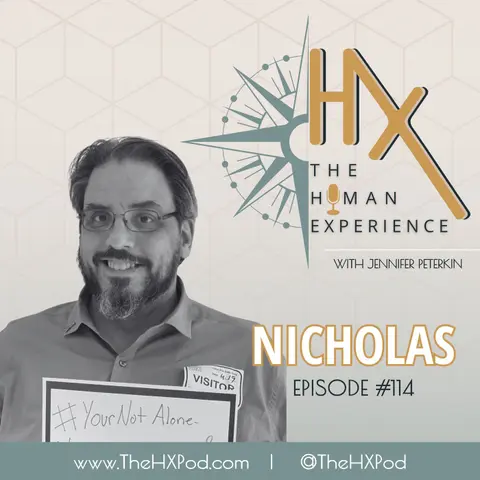
In this episode, Jennifer sits down with Nicholas Ruchlewicz in his home in Herndon, Virginia, nearly ten years to the day after a single-vehicle motorcycle crash left him with a traumatic brain injury, a shattered pelvis, and a recovery no one expected him to fully wake up from. He walks through the disorienting fog of relearning how to move, speak, and simply be a person again, and how that experience became the foundation for a life devoted to advocacy: mentoring fellow trauma survivors, lobbying Congress on brain injury awareness, and even building healing spaces inside the tabletop role-playing gaming community wherein he has always found acceptance and inspiration.
This conversation is less about recovery as a finish line and more about what it means to keep choosing to move forward. It’s also about what living with an “invisible injury” looks like, from the perspective of someone who has walked through it - how it changes your entire life, and how those around you can show up in support.
📍 This episode was recorded in Herndon, Virginia.
MEET NICHOLAS RUCHLEWICZ
Nicholas Ruchlewicz is a trauma and brain injury survivor, mental health advocate, gamer, writer, and public speaker. After surviving a motorcycle crash, Nicholas turned his experiences with trauma, anxiety, and severe depression into an opportunity to help others facing isolation and recovery. An avid tabletop gamer, he uses role-playing games and community as tools for connection, recovery, and mental wellness. Music and concerts have also been an important outlet, allowing him to connect with people and communities around the world. Nicholas has written for internal organizations and spoken before the United States Congress about the importance of trauma support. Through advocacy and lived experience, he works to remind others that recovery does not have to happen alone.
CONNECT WITH NICHOLAS
KEY TAKEAWAYS
Here's what stayed with us long after this conversation ended:
- A single moment can split a life into before and after, but it doesn't have to end the story. Nicholas's crash happened in an instant he has no memory of, yet he describes his trauma not as a period but as “a comma, a semicolon”...proof that the chapter kept going.
- Recovery isn't linear, and it isn't just physical. Relearning to walk and use his hands ran alongside relearning how to regulate anger, a symptom Nicholas learned is common after right-side brain injuries; a reminder that healing from trauma is as much emotional as physical.
- Sympathy stands over someone; empathy stands with them. Nicholas's own framing - that showing up for someone isn't about fixing them, it's about staying present beside them - became the emotional throughline of the entire conversation.
- Isolation is often the hardest part of an “invisible injury.” Nicholas points out that brain injury survivors carry both the isolation of their condition and whatever life struggles existed before it. And that beating that isolation, for himself and others, became his life's work.
- Helping others became the measure of his own healing. Nicholas describes mentoring fellow trauma patients as the thing that let him see “where I am versus where I was”, turning his advocacy into a mirror for his own progress.
- Unconventional communities can become healing spaces. Through his work with the tabletop gaming organization Paizo, Nicholas built inclusive gaming tables and charity events specifically for people who, like he once did, feel like they don't belong anywhere else.
- Compassion, to Nicholas, means accepting people exactly where they are. He defines it as the ability to forgive, accept, and be moved by what led someone to this moment, without judgment.
SEO KEYWORDS
traumatic brain injury survivor, motorcycle accident recovery, invisible injury awareness, brain injury awareness month, mental health advocacy for men, trauma recovery story, peer mentoring trauma survivors, tabletop gaming and mental health, empathy vs sympathy, cognitive behavioral therapy, suicide prevention advocacy, healing through community
STAY CONNECTED
The Human Experience Podcast | Instagram | Facebook
The Human Experience Legacies | Instagram
0:00 Welcome to the Human Experience, a podcast about the stories we live out every day and the importance of championing the vulnerability and courage of the storyteller. I'm your host, Jennifer Peterkin, and it was through my own lived story of experiencing domestic violence that this podcast was created. By traveling the globe and interviewing each guest in person, I am convinced now more than ever, that stories have the power to change the world. Thank you for being here. In a world full of noise, to listen with intention is an act of resistance. Nicholas, thank you so much for having me in your home today so that we can do this interview. It's very kind to share this space with you and I'm really excited to listen to your story, to hear from you about the experiences in your life that led you to where you are today. So thanks for. Thanks for hosting us.
0:56 Thank you, Jennifer. I appreciate it very much. So if I were to ask you, where does your story start? How would you answer that question? The biggest chapter, let's just say, in my story, would be March 15, 2016, which is almost 10 years to the day away. That was when I was involved in a single vehicle motorcycle crash and quite a bit of injury. Separated pelvic circle, broken sacroiliac, crushed left orbital, massive concussion, right side brain bleed, subdermal hematoma. Wow. Yeah. Mouthful. Obviously. Just a little bit of trauma. Yeah, just a smidge. Oh, my goodness. Like I said, it's been about 10 years, which is. I mean, it seems like forever. It also seems like it just happened, and I'm grateful that I've been able to. Again, that was just one chapter in my story, but that chapter has grown and grown. So I'm grateful to be able to utilize my experience, my trauma, my brain injury, and my mental health struggles to help support others and help. Help bring awareness to, you know, what goes on in, in all of us. But, you know, especially, you know, men with traumatic brain injuries and other, you know, it's very isolating. It's very.
2:15 It's tough. And everyone. Every injury is different and they call it the invisible injury. And so I just like to give a voice because I have a good voice. You do have a good voice. As people ask like, oh, you like npr? I'm like, not really. It's like, oh, well, your initial, I was like, my initials are Nicholas Peter Clevage. So npr. So that was the whole. And I like to talk a lot. So it worked out really well. Wow, what a. I mean, talk about a. A singular moment where everything changes. And I feel like we don't always have those in life. Like, you know, things are pretty gradual or they happen over enough of a span of time that we're really actually looking back to see how much things have changed. But for you, that really in the blink of an eye, essentially.
3:09 Were you an avid motorcycle rider? No, I mean, I just. So I had a. I had a really rough separation and divorce the year before and I wanted to ride. I had a bunch of co workers that rode. They really wanted me to ride with them. So I was excited to do it. So that was my big, you know, I just get out of jail card. Like, oh, I just got, you know, separated everything. It's finalized. Great. So I had my license for about a year, my motorcycle license. And then. And I got a bike. And we're in Northern Virginia and as we know, Northeast weather can change anytime. So it snowed, I think the first week of March. So I didn't want to ride my new bike out in it. But I had a really big storage unit with all my stuff from my separation. I was living in my mom's basement, what every 35 year old male is excited to do. And I would just ride the bike every night, just, I didn't want to take it on the road, ruin the paint. And then one day something happened and then, yeah, it was, it was all very fortunate circumstance that it happened. Like my mother came home, she asked my brother, like, what's Nicholas dogs doing? They're acting up. I don't know. Called my girlfriend, she couldn't know my other friend's number. Met someone on Facebook, had his number, then he called him and they all came to the storage unit and nothing looked like it was wrong. They called the police and a friend broke open the gate so the cops can go in there.
4:40 So it wasn't breaking and entering. And that's where the paramedics found me. So my last time they saw me on camera was about 7:30 and 7:31, going around the facility. And the paramedics showed up around 11:20 at night, so about four hours. And were you at all aware of any of this as it was happening? Okay, I didn't think so, but I wanted to just clarify. Yeah. And every. So I was never in a coma, but I was technically, I was responsive on the scene. As in when people came, I would make noises or try to, you know, when they'd ask me, you know, I would, I would make sounds. So. But I have no memory of it. You know, every brain injury is different.
5:21 You know, my, my injury and of course I was wearing a helmet. If not, I would have been gone instantly. Yeah, but you know, right side of your brain controls like your vision, your cognitive functions, problem solving ability. So all that was your right side of your brain. So for me it was like lights out for almost 12 days. Even though I was active, people would talk to me and I would respond to them like oh, we're gonna go to dinner or stuff like that to get me to eat. But I have zero. It's very much a blank slate. Yeah. How much time did you spend in the hospital? So I was in the trauma center at Inova Fairfax, which is only area only Level 1 TRAU Trauma Center. I was taken there right away. I was there for roughly 13 days.
6:12 Yeah, about 13 days. And then I was taken to a acute rehab facility in Alexandria, Mount Vernon Rehabilitation Center. So even though, and I was discharged from the trauma unit because I was like stable. I was not aware of anything. Like I was not, I was not aware of where I was anything else. And I remember going to, that was the rehab facility because when the patient transport said is I'm going to take you there. My name's Kyle and I said that's my girlfriend's brother's name. So that's when my brain started trying to click. So I went to a rehab facility where I had to relearn how to use my hands. I couldn't, I saw two of everything. I couldn't read my left side, I couldn't stand. I was not weight bearing for 12 weeks because of the pelvic separation and I had to regain everything, complete independence.
7:10 I mean when you have to have your 35 year old male, having people help clean you up and use restroom and shower, it's not a fun little feeling to be in. So I was in the facility for about 15 days. I was released on April 15 and I was released in a wheelchair. I still didn't have any of my hair because I had to. I would say that movie Face off is full of crap because they cut me from ear to ear to redo my eye socket. So I had to, it was a long recovery. And in the hospital I can see the gains physically and I can see when I work with patients their gains are doing. But the hardest part for a brain injury is sometimes you don't know what's going on behind their eyes. And so I had to, I had to force myself to slow down, have a sort of self to kind of recognize where I was. I was very compulsive. It's very Much a symptom of a right side brain injury.
8:12 And also anger is a very much a triggering thing. That's why we'll say, oh, when they get head injuries, they're very angry. Our bodies have a hard time of trying to process emotions, and that's where adrenaline comes out. And fortunately, like I said earlier, I had a really rough separation a year before, which I always say was the hardest thing I ever went through, because I was around people that wanted to hate or take. And at least I was in the hospital that wanted to help me. But through that, my previous journey into the hospital, I did see a therapist to help. I was like, how do I help my ex wife? How do I help them? And I found out how to help myself. And I needed that because I don't know if I would still be here today. I learned a lot about anger, you know, through that is anger is a secondary emotion to understand. So, like, for me, my triggering is getting frustrated or belittled.
9:06 So nothing's more frustrating. People having to clean up after yourself or belittled. So I was able to, you know, do well. I was discharged and then I had home health for a few weeks and then roughly six, three months, four months of outpatient where I had to relearn how to again stand, you know, walk, carry stuff, and then relax, type everything. So it was a. Yeah, still going, but I'm still trying. Yeah, yeah. That is quite a journey. And as you were talking, you kind of hit on it. But I'm thinking about how you're already in this space of life where you're so vulnerable and you're feeling so low. And to become physically dependent is in.
9:55 Especially in that. In just like a moment, like an accident, I imagine, is one of the most vulnerable things that you can go through as a human. And so your state of mind while you're going through all of that, it just must have been very difficult to go through your new current circumstances. But life on the other side wasn't necessarily something you were looking forward to either, because you weren't in your best place in life. You were already going through it. So when you're starting the first processes of healing, what kind of takes center stage at that point in your mind? Is it. Is it that you're just focused on healing? Was that kind of everything pivoted to that or was there a larger, oh, my God, what is my life gonna look like now?
10:46 Thought process happening? So there's. I mean, it's both. So in the trauma unit, there was no. We have Something now called Trauma Survivors Network. And I'm part of that. And we speak to trauma patients and it's a lot of support groups talking about that. It was not active when my trauma happened. You know, fortunately, my girlfriend, now my wife, she suffered a concussion, a head injury before. So she kind of recognized certain impulses that I was going through. And understanding this was a of it. It is a normal, if you whatever that can be from a head injury. When I was in the acute rehab facility, I, you know, felt zero value myself. Like, how could I do this? The hurt I caused my family.
11:29 And I just wanted to get. Figure out how to get through it. I could figure it out. I can do it. And there was probably a lot more that I needed to accept. And I realized I needed to accept that I don't have control over anything. And I don't like being controlled for some reason. And not thing. You know, when you realize I say someone tell me the. Tell me a biggest secret, you know you can. I said, there's no such thing as control. There is none. It's. But I've realized it's our own actions of what we can control and how we do with those actions is. Is what helps us. And for me, there was a peer mentoring in the hospital. I can only go. I only went once. I was in a lot of discomfort. I don't call it pain, I call it discomfort. But I had. They had to take me out. But I heard a person speak and they were spe of.
12:19 We had a brain aneurysm and it was left side and they woke up and not knowing what numbers were and not understanding. And they were a math professor. And I was like, why am I so selfish that I'm upset that I can't just calm down and relax? So hearing them speak even for five minutes, made me realize that, no, I can do this because I want to help others see that they're not alone. Because I felt alone in so many parts of my life. And a brain injury doesn't help not feeling alone. And I wanted to ensure that others knew that they had people there through their journey. I said that my trauma showed me that I wasn't invisible. And I thought I was forever, but I realized that I 100% was. And a lot of people saw me. And I've definitely been able to help quite a bit of people through that, which is how I chose to heal. Moving forward, just trying to figure out, how can I help someone? How can I help someone? Because in turn, it helps me as well. Because it allows me to see where I am then versus where I was.
13:32 And I'll tell patients sometimes, you know, no matter how frustrating it is, you look down, you can't use your hand, you can't walk, it can't do this. But we always forget to look behind us at how far we've come. And that's something that is, I sometimes try to reflect about in the moment, you know, so depressions, I believe, is in the past. Anxiety is our future. They say joy lives in the present now. I don't listen to my own stuff. I speak. I mean, I'm very anxious about a lot, sure. But I try to remember what's around me. And then when I take an active role in helping support others through, you know, music, games, just in the, you know, hospital, it allows me to see more, more and more of my healing path and my journey, where I've been. Yeah, that's amazing.
14:21 I think it's really interesting to talk about this because one of the things that I keep thinking about is that people don't talk about brain injuries often. And so there's so much unknown to, I feel like the general public about what that means. I mean, you hear brain injury and you're go, you go, oh, wow, that's, that's, that's bad or that's hard. But what day to day life looks like, what healing looks like, what practicalities there are that comes with it. And so I'm sitting here thinking about how lonely it must feel to be walking through that without a support network. And on top of that, you're talking about the fact that you're already a full person before this with full, a life full of experiences. And so you're bringing that too.
15:13 And so all of that other stuff doesn't go away just because you have an injury. Right. And so it's all compounding as well. But specifically about brain injury, what do you think are like the biggest misconceptions people have about brain injury? That people are slow, that they are mentally handicapped, or that they don't understand what others are going through. They don't have empathy, they don't have, you know, certain emotional regulation. So again, every injury is different. So there's a person I care about and she's another mentor. She actually was at my wedding and I didn't know her until after my injury, but she had a closed head injury in 82 and in coma for six months and had. But so when she speaks, you can. It's very soft or it's, it's harder for her to speak. But I understand it and I take the time to listen. And that's something that is very hard because a brain, Someone with an injury, they want to feel that they are worthy of someone else and worth their time and their. The effort they're putting into healing.
16:28 So having a brain injury, working with other brain injury survivors, I know that if I look at them directly, you know, eye contact to make sure I'm focusing on them, they can communicate with me. It also shows them the respect and the dignity of saying, like, I'm trying to be here with you on your level. And that's, I think, the hardest part people will do is we want to make quick judgments, quick assumptions of it. But there's a lot of things that go on in our own stories. Like you said, there was a story, you know, everything didn't happen. Just you woke up that morning and that's what your day was, or so your life. I mean, so people have struggles. People go through stuff on your day to day. So I think that my brain injury allowed me to be more vocal and open to understand that, you know, like I said, we all have. We all have empathy. We all can have empathy. We do have that ability. And one of the things I learned was, you know, in the pandemic was probably the first time everyone in the globe was going through something at once. And that is tragic and crazy, but one thing we can do is we can now show empathy for them. And as a trauma survivor, as a rehabilitation, you know, working through it, one thing that I say that we have a lot of power over is helping people beat isolation, because we understand what it's like to feel the walls closing into feeling like you're lost. So we have the ability to help challenge that narrative. Yeah, yeah. I think isolation
18:01 is huge, right? I mean, in any. In any thing that people are suffering with, isolation is a huge side effect and can become a huge symptom of what you're suffering with. That only makes it worse. And to you, in the moment, it feels like it feels necessary, right? It feels. It could feel like you have no other choice. It could also feel like it's too overwhelming to be out of isolation. But I think enough has been looked into about humanity to say that that isolation is never going to flourish or have us flourish as people.
18:47 So I think that's a huge, huge thing that we always have to be aware of when anybody in our lives is going through something is, are they isol? And how can I show up for them so that they don't feel so alone. Yeah. I think that again, I've learned a lot through. I always say I give the Cliff Notes version of therapy. 16 years of therapy. I'm pretty good at it. But, you know, I learned a lot about loss and grief through it. Actually, before I lost my champ, my first dog, I mean, he was, he was there for everything with me. He was there my first marriage, my separation, my, my, My trauma. And then, you know, I lost. When I lost him, I thought I was, you know, it was crushed.
19:32 I was so hard. But I. I learned from another, actually a therapist, a pet loss therapist, that, you know, his grief is an urn that was in my table and it's this big and it looks so big, but the world's getting bigger around it. But the grief never changes. So all those changes in life or a grief of that moment, and if I really talk about. I really focus on the negative things, it becomes a bigger thing than it is. Like, truthfully, if I start talking about my pain or what, that's when I was call it pain. If I start saying things, my body will start feeling it more. Yeah. So I always say I have it in a corner. I respect where it is. And if things start changing, I know that I'm.
20:16 I know I need to change how I'm doing. And just so again, it's that beating isolation, being afraid of what was there or what you could have been instead of trying to just see the world around us. That's why I kind of came up with the name of saying gift of perspective. I saw people very well for who they were. And I tried. It was very, you know, trying to be kind and seeing them. But my trauma, my brain injury took all the blinders off. So I see everything around me. So that's how I can see where people are. I can see what people. And I find little ways to help. Help make their lives a little bit better or at least be willing to be part of that journey.
20:59 I saw something once where sympathy is when you're caring for someone and you're standing over them. But empathy is when you're caring with someone, but you're standing with them. And I always try to make sure that people know that I am there with them. I can't take it away. But through those journeys, I will be there and standing with you through that. And I will always do that. I mean, there's a co worker of mine and they were really sick and like. Did you mean you would help me with financial. Yeah, and I was there. I'm I'm that I'm that old reliable. I'm a, you know, pain in the butt for so many different things, but I am definitely honest. And I try to always remember to look at myself in the mirror at the end of the day, and do I like what I see? Do I like what I did?
21:44 Do I like how I left that? Because, you know, every day could be different, and every day. So I always want to make sure that I. I'm gonna be okay because I did the best what I could do. Yeah. Yeah. I think we're very intimidated sometimes by the idea of helping people because we're so obsessed with resolution and fixing. And I imagine something like having a brain injury kind of puts that into perspective that you really. You don't have, as you said, control. And so to help someone isn't to fix them, it's to stand with them. Yeah. So I like that. I learned that help is a gift we freely give, and it's something that we can do, and it makes me feel better, too, and just thanking someone. And so I remember being out of the hospital. I remember getting my coffee, but I was in a wheelchair and wheeling myself up, and this person just doesn't even hold the door for me. I was like, oh, thanks. And I was angry. But there was another person in line that immediately came out to help hold it. A nice thing, because no matter if we focus on all the bad, we will be overwhelmed by it.
22:57 What I would say in the hospital was, if I don't give negative breath, it doesn't live. So trying not to focus on that means I'm the one that can do it. And it's what I tell people. Just be your own narrator. Tell your own story. Because people can't take it away from you if you stand in front of it and say it. I said that to patients. I just say anything. So, again, one of the reasons why I help with my isolation, with my brain injury is standing in front of it and speaking about it to making my own. My own strength, my own recovery. Because these are my decisions that not someone else. For me, these were my decisions through it. Yeah. Yeah. It's so important. I mean, I imagine it's something that is a constant journey. Right. Because any work on ourselves is a constant journey. But in terms of your healing, when did it start to shift for you that it wasn't, like, your sole focus? Because now you're in advocacy, right? You're in advocacy. You're doing, you're helping. And I'm sure you're still Healing, because we all are. But when did that kind of shift for you that you could say, maybe I can be part of the solution here to help other people?
24:13 It happened in end of the year in 2016. I mean, I was just grateful to be able to start speaking to patients and help them out. And I couldn't. I wasn't walking yet in August very well. I had a walker, but it was tough. And I always say, like, I remember when I could start walking again, July 15, 2016. And they said, you can. And I laughed. She's like, you're not going to be on a cane. You'll be in a walk. And I laughed. Yeah, I'm going to walk her out of here. And that was the hardest steps I ever took. Just learning how to walk again. Everything could work fine, but everything gets erased. You're like, you don't use your legs for 12 weeks. It's hard to make sure your body realizes, hey, you got to put one foot in front of the other. But I saw the power that others had, you know, over just speaking in a room of patients and speaking of someone to give them that hope.
25:05 Because again, we only see ourselves in the current moment. We don't see ourselves where they are. And I couldn't really walk in on my birthday, so I wanted to have a birthday party. It was in October and there's a park in here and I have the celebration. And so when we do mentoring, they want you to do like a 10 minute mentoring, you know, talk about your journey. So I had to write the. I did this thing and I wanted to speak about it and celebrate it. So I wanted my girlfriend to record it. And she's like, why do you want to record it? I was like, well, your family came up from Florida. This therapist now live in there. So I invited my hospital therapist here, I invited friends, and I gave this mentoring speech. And again, my physical therapists were there and I said everybody's favorite things now, like we're, you know, doing balance and lunging exercises.
25:51 And that's where I proposed. So I say that because, you know, I wanted to make sure that my healing was. It wasn't just for me. It was for my tribe that I had around me. And I saw that just being able to speak to someone can really help change that trajectory. Hearing someone talk for five minutes. So for me, my healing was. That was my path forward. And. And I remember a patient one time said to me, he's like, when did you come 100%. And that was like one of the hardest like, it felt like a slap, like a hundred percent. I'm not. Like, I still don't. I mean, now to this day, I don't have full feeling in my hand. Sometimes if I do too much, my eye will drift, blah, blah, blah. But I am beyond 100 because I know ways I can help others. So it has given me a better path forward with it. So I can take whatever's wrong with me and sometimes just I know where it is, I'll put it there. But me helping others has helped show me how far I've come.
26:53 So being an advocate, I was always nice, I was always kind to people, always wanted to help them. But becoming an advocate was very. It was a very easy transition just because of. I knew what it was like to feel lost and alone. I didn't want others to do that. So my fear of the unknown, my fear of the dark made sure that I kept pushing forward to advocate for others, help others, show them that there's someone on their path, no matter where they are. And finding inspiration in all different ways and thanking an artist, thanking a musician, thanking a writer about what they're doing can really help change their trajectory. Maybe they are doing the right things and they're doing something that'll help others because it feels good to tell someone, have a good day. It feels good to hold the door of someone and have them thank you.
27:44 Hearing that is really gratifying. So I make sure that I can do that as much as I can to ensure that there was a reason why I made it. There's a reason why I push hard is because I was able to help that person out. I would say if I help one person, I guess it was worth it. And I know I've helped thousands of people again almost 10 years, and I'm still trying to do things to keep pushing myself. And three years ago, we went to Congress, spoke to different representatives about the importance of having. I was actually one of the state representatives we saw was Delaware county, actually, because we went up because we had other people, other trauma survivors that were in the area, and that's where we spoke. But I mean, this year my.
28:32 My plan is that I'm going to go to Virginia. I'm already talking to my state House of Delegate representative. I want to try to work on some of the mental health barriers we have in Virginia and others and help bring awareness to it. So, I mean, hell, I got a. I did a little simple link tree of all my different podcasts or different advocacy work of just where it is to give People that again, that chance to help support others. And that's what matters. Yeah, absolutely. Especially now, as hard as the world is, and it's definitely hard and it's hard not to get caught up in it, but I try to. Having a platform like this, speaking with yourself, many others, and just connecting with people, we don't know how, how much it helps until you know someone. I could say something and people will hold on to it. So that's pretty neat to be able to have a power to help others that you'll never see. But it's very good that maybe something that I said or did will help them on their journey. Yeah, absolutely.
29:40 How did you practically actually get started with your advocacy? Like what was the first thing that you did? You mentioned the trauma network that wasn't really active when you were going through your trauma, but now it's a lot more active. So how did you kind of start to get involved and how did you build from there? Because I know you're doing some different things than most people. I didn't. I always wanted to build a better boat and do things better. So trauma survivors wasn't active when I was there and I found them on chance because it's a rehab hospital.
30:22 There was a little yearly event and there was someone from trauma survivors and I spoke to her about it and wanted to learn more. And then I went into the hospital and met, you know, and that's was a support group. And through that I could see how good it would be to help others through those traumatic events where they feel that there is no hope. So I was able to work with them, work at the hospital network and different trainings to be able to speak to patients and speak to the families about recovery and about the journey and help answer any questions and help being on their team for it. And it was through trauma survivors where I was able to again go with a National Trauma Surgeons association and lobby Congress. That's where I was able to always keep asking questions. And March is actually, I don't know if I might have said before, is Brain Injury Awareness Month.
31:20 Oh, okay. So I would say I got a double jeopardy. March 15, the ides of March on Brain Injury Awareness Month. So I did two big checkboxes, but again, I have different type of advocacy and I don't know if you may or may not know Emilia Clarke from Game of Thrones. Uh huh. Yes. Did you know she suffered a brain aneurysm? Correct? I did not know that. Yeah. In 2011. Yeah. She was only, I think 2223. She ended up having two others and I mean had multiple brain surgeries, everything else. And she started a foundation called SameYou.org because again, very fortunate how well she healed, how she tried me, she had to learn how to speak. I mean there's so many different. Again, every injury is different. But she started a foundation, SameYou.org and I, again, through my advocacy, I reached out to them and, and I share my story and they really liked it. So they featured me on one of their, I mean this is an international organization and they featured me as an advocate and through them and their work with their United Kingdoms based company in London, I worked with University of Binghamton and did a study on couples and brain injury, how it affects couples.
32:27 So I've done studies with them. I've talked to different, I've talked to someone at Harvard and other different medical studies about brain injury, trauma or recovery through it. So I don't know what started it, but I just know. So as I say, just always do the next right thing. And I keep pushing. I used to have like every year on the trauma versary, as I call it. I used to always kind of do like an apology tour. Oh, I'm so sorry to this. I, you know, I, I did a lot of inflection on all the stuff that I maybe caused the pain in others and not deserving of their help. Help. So now every year that I get another traumaversary, I now say what I've did since the last year. Here's what I've done. From Congress to podcast to meeting interviewing musicians and comic book writers, whatever the case may be, here's what I've been able to do to keep pushing the envelope forward. And in 10 years, I've lived more than two lifetimes just.
33:31 And I'm not, I'm not slowing down. I'm too much of a pain. I mean, I'm too stubborn to slow down. So I'm going to keep pushing forward because I'd never want people to feel alone or lost. I mean, I was very fortunate my trauma happened. I had great insurance. Now insurance is, it's, it's insurance, let's just say. So I do a lot now to help make sure that people don't have that struggle. In the year of my trauma, I think I spent $14,000 on my trauma. Wow. Yeah. But in 2019, I spent 29,000. And that was because of a different healthcare company and they weren't covering my therapy and stuff like that. And I was like, I said, well, we have other Therapists. And I always say, you're exactly right.
34:15 Let me send a different babysitter to your house tomorrow. I'll get a different dog sitter, no problem. And they look at me. I was like, but you don't need. It's not a network. So I don't really care. And they're like, like. And I was like, when someone has a brain injury or an injury or any life trauma, that is hard to build that relationship. And I didn't say this, and I don't really say this much. So again, I was going through therapy, you know, again, my previous relationship. How do I help? How do I help myself? I learned how to help myself. I didn't see my therapist for about a month because I was obviously in the hospital. I came out, I was still like, no, no hair in my head, all the stitches, and I was in a wheelchair. And I saw her literally the next week she had a heart attack and had to stop counseling.
35:00 So you had the biggest safety net I thought I could have through this, pulled out from under me. And I felt lost and I felt unknown. But I knew that this was very critical to mine. And I went to, I think Psychology Today, went to the website, put in all the names. Here's what I want to do. I learned something called cognitive behavioral therapy is what I utilized, what she, her technique was. So I used that as a keyword and, and reached out to five people. Three of them didn't respond. One of them says, I guess two of them didn't respond. Two of them said, they, they're not seeing anybody next to patients. And one said, I can see you, but I only see during daytime hours, you know, nine to five. And I said, you know, this is the most important thing I can do is this is important for me to heal.
35:47 And I'm so it was in July of 2016 and I'm still, I'm still seeing her today. And even if it's not a cover insurance that. But I know that it's a safe space for me to challenge myself. And she will help me challenge myself and she will hold me accountable. And I think that is one of the biggest misconceptions about therapy. It's not just a bitch fest, not supposed to be there and just say how bad the world is and that the world is going to be bad. I always say life is a four letter word, depends on how you want to use it, no matter what, what. So. But what my therapist does and what I choose to do is challenge myself to make it a little Bit better try to. What did I not do right? What could I do better? And I always try to look at myself in the third person.
36:34 I say, sometimes I want to see how did I handle the situation? How did I react to that? Was that the appropriate? So it's a lot of stuff always going on in my mind. But through therapy, through her and through the work I did, I understood that anger is a loud emotion, but it is, there's. There's a reason why you're angry. And there is. It is okay to be that. It is okay to know that you're not helpless or that you are healing and that the world is. I always say the world doesn't care about us. We have to make it care about us. And the more we understand that and, you know, put our best foot forward, the there is no thing is easy. It'll help us make our own story.
37:18 And that's again, it's what I've done with therapy through the years of it. I speak about it because I don't want people to have that financial gap and that financial issues to see, seek help. I mean, we have all this horrible violence or everything else going on, which we could talk for ten hours on, but. And they always say it's mental health, mental health thing. I said, you're right. Then how are we going to fix it? I have many ways that we can do it, but we can't stigmatize men going to therapy. I mean, men are only allowed one emotion, anger. And women are allowed no emotion or all emotions but anger. It's all bs. We're all allowed all the same. And understanding how to deconstruct it is the important thing. And understanding that you are not right all the time and understand that you can make mistakes because we're people, we are flawless.
38:06 But being flawed doesn't mean you're bad. It just means you're human. And understanding those flaws and being able to grow from them is what makes someone. That's what makes someone strong, is being able to take those vulnerabilities and say, how do I want to make it better? How can I do this better? And male traumatic brain injury survivors are twice as likely to die by suicide than regular male. I mean, it's an epidemic now. Basically, all the white male suicides that are there and traumatic brain injuries are twice as likely because you get stuck in your own head. And I've spoken to many soldier, former survivors, veterans, whatever, and I understand when they say something about their brain injury and how scary it is. And so me Being able to help stand up to show that they're not alone and is really powerful. And that is always healing to me, because no matter how hard, no matter how hard it feels, I know what feels great is being able to stand next to someone and say, I'm here for you. Yeah. Yeah. I can only imagine what the, what the numbers are on that. But how do you begin to destigmatize therapy?
39:28 Because I feel like in 2026, I cannot believe that it's still such a problem that, that people have. That people have with therapy in general. Destigmatize it. Well, I do it by speaking about my own journey all the time because I find the more I. So when we. Brene Brown said, if you can't be vulnerable, you can't be courageous. So that's why I speak so much about my journey with therapy, my journey with my mental health state, because I want others to see that they are not alone in it. And we speak about. Especially when I speak about trauma. I mean, trauma is the number one cause of death between 1 and 45.
40:11 Technically, guns are 1 in 17, but we're not going to say that. But it's still trauma. But, you know, so it happens to a lot of people. So when I speak about my trauma, people will come up to me and say how it might have affected them. And when I speak about my struggles with my reasons to, you know, when, when things suck or when reason, you know, when I can speak about my vulnerabilities and my fears, it shows others that, you know, they're safe to speak to me. It's not even my HIPAA training anything else. I will always be there for someone. And I, I've spoken to many patients and many survivors of all sorts of, of walks of life, and I know we're all in this together. And when I can speak to someone about the struggles and how hard therapy was for me, therapy was very hard. If it's not hard, probably not doing it right. Yep. It's. I mean, it only took how long to get where we are now, and, you know, it's like, it was. It was pretty funny. I, I heard a comedian of the day and they said, you know, my parents saved for therapy. I have a, I have a, you know, you don't break. You break it, you buy it policy with them. I like that.
41:28 But it's, you know, it's, it's part of the. It's. It's part of what made us, you know, who we are. And it's not fun, but A lot of things in life aren't fun. Yeah. But understanding that you're not omnipotent, you're not, you have flaws. I think that's a different type of person though, to understand that they are not, not perfect. You know, perfect is the enemy of good. So sometimes they think they are perfect, but they're not. And I think that that's the harder one to try to get people to understand that they can do better. And being better is not being wrong is not a problem. It's just being wrong.
42:12 Yeah. It's just having a struggle. That's it. And unfortunately, humankind, mankind would not grow if it wasn't for struggles. That's why we got out of the caves. That's why we did it. Because we had the struggles there and we've had to grow. So the more we put ourselves in the uncomfortable, the stronger we can come toward it. I am a fail first person. I will just do it. I always say I'm going to fail anyhow. I might as well do it. It's funny because we were talking about the. They say it's like, well, you're always going to fail if you can't make a mistake. I was like, that's a perfect way of saying what I am. You're right, I can never make a mistake, but I'm always going to fail. But when you go through kind of that mentality of, you know, when.
42:56 What's the worst going to happen? You're going to try it and, you know, having that. The blemishes on my, you know, you know, from my life, we're just part of my story. It didn't. I always say my, my trauma didn't end in a period. It's just a. It's a. It's a comma. It's semicolon. What? It's just part of our story. So that crappy day that you had when you're in a fight with someone that didn't actually. That's not the end of your story. You can take those little parts of your chapter and write it yourself or rewrite where you need to be. When you start going and reflecting back, that's where I was. And when I was talking to the singer of the band Kuna Coyle about it, they had a new album, it was 20 years later, their comedies xx and she was saying like, you know, people don't understand. They're not the same person they were 20 years ago.
43:49 I mean, they are the same in many ways, but the experiences are different than they are now. And I said, what a perfect analogy for my trauma because I am the same person, but I'm also a different person because of it. Yeah. And that's not a bad thing. I mean, it's a very. I would say it's a very, very expensive thing sometimes. And I always say that it's a. The, the terrible initiation fee to get in my club was. But it's a family I would never want to lose because they have been through it with me. And when they're struggling, I will accept and be there with them. And just like when I struggle, they will come there too. But, you know, my talk about therapy, my talk about my struggles as adult male, whatever, you know, my. Whatever you want the case may be, has actually led others to see and reach out to me about how important it is. Again, interviewing someone international and really famous and really popular. And people listening to that reached out to me over in Europe or Australia telling me how trauma affected them or how they did. And that's kind of crazy and cool when you've been able to find a way to connect to others and then again expand more and more. Yeah, I mean, I have to imagine it's really encouraging to. Because you don't always see the effect that you have. Right?
45:15 I mean, I would say most of the time you don't, but that doesn't mean that you're not having the effect. So when you can see the results of something like that, it must just be really affirming and rewarding to be able to have that. So I know that you use gaming as part of a healing process. This is so out of my wheelhouse, but I'm very curious as to how that came about and what you actually do to. To help people through gaming. Well, I would say my nerd street cred's really high, as you can see. I mean, I'm definitely. I love it.
45:57 Nerd at heart. So I. Gaming was very important. You know, I play one of the, you know, everybody knows. Everybody knows D and D and stuff. Now I play their biggest competitor for years. Everybody knows it because of, you know, critical role, popular stuff, you know, stranger things all of a sudden. It's always been there guys, but you used to make fun of me or chase you into parents basements. So. But I was playing games and I was actually. I mean, I was with my previous marriage and I would go see my friends and play games and that was where things like there was jealousy that I was going out. There was jealousy and it was something I was enjoying. Friends I was enjoying seeing them. So I was like, I want to go see my friends. There's nothing bad about it. And that, you know, that was really a catalyst.
46:41 Say, okay, if I can't even do my enjoyment because that's be there. Maybe something's wrong in this separated, you know, my friends live all the way out Manassas and I'm living in northern, I live in Alexandria area. So I'm like, well, what am I going to do? I want to still play. I want to see my friends, friends. And instead of being at home in that, in that recovery of separation, I didn't want to be stuck in my house playing video games. I always say I'm a wow World of Warcraft survivor. I played that. I have my 15 year chip, still not playing it. But I didn't want to be at home online as an online warrior and do that. I wanted to get out. So I pushed myself to say, okay, I want to go out and meet people, go to different stores, gaming stores, meet people. And so I started pushing myself again through my separation when I was still with my mom, everything else, trying to meet people. So I'd go all over the area, play different games, go to small conventions. And then my trauma happened.
47:39 So everything's really different. It was really cool though because some of my players, some of my game masters, they visit me in the hospital, they came to see me and then when I went back into that environment, it's very overwhelming when you're in a big store with lights, in a wheelchair, where you want walking looking at you differently. It's very whelming. So right side injury, left side negligence. So I couldn't really move my left side. I had a hard time. I could read, but I had a hard time with my vision. I had to relearn how to use my eyes. So. And right side brain injury. A lot of that is executive function and creative function. Going between the two. Well, I used a role playing game. I always moved like the pieces with my left side. Obviously I'm using math rocks when I roll dice, add those together and then I would have to do analytical and creative thought at the same time. So I used all that for it.
48:29 And the company I do a lot of gaming with, Paizo is very much open and affirming, an inclusive company. And I like being in a store and feeling comfortable going there and someone who felt isolated, who felt lost, who felt like a child in a crazy world. I wanted to make sure that other people didn't have that, that fear that they're always welcome at me my table in my event. So that's why I've done so much with gaming with the organization Paizo. I mean big conventions. I do a lot of charity events and raising a lot of money for. I think last year we did. We did something on Labor Day at my friend's store in College park. We raised 1400 out $1200 for local mental health and suicide prevention thing in Prince William, Prince George's County. So it's like, like that's kind of neat where I've been able to take a game thing like how can I do more to help others? I do. I'm always again my bleeding heart is always there. I always liked helping. I used to love Christmas but unfortunately previous situation made me dislike Christmas just of the greed and this. But what I do now is I try to do a lot for you know, Toys for Tots. Do a lot of stuff. So I started a little gaming day with Toys for Tots. People bring games to, you know, donate toys, donate. We'd play games all day. Well, it got Pandemic happened which was fun. So we started going online but we were still in person. So we actually now this past year we had 22
50:01 different tables across 14 different stores across the country all playing game, all bringing toys in for Toys for Tots. Wow. So I've been able to take something that. Just a hobby that you know, I always took particular Pandemic that sent every back in their parents basements but. But I take this ability to say okay, I'm gonna get out. I wanna see people in public. I want people to be able to walk in and feel comfortable where they are and we can do something good out of the mix too. That's I think very. I forget sometimes what I've been able to do and sometimes it seems so seamless and it isn't. I just do it. You know, it's the. So it's definitely been. It still is healing. When I have a bad day, my wife feel like do you wanna play a game? You wanna go see your. Because it is my chance to be creative. It is my chance to be able to help others. And it is my chance to have someone feel comfortable where they are. And I want everybody to have that feeling because I know what it was like to not be comfortable with where you were. And the gaming community is. I mean it's still not. I mean it's popular now but not like all gamers really are social butterflies. So to give them that ability to feel comfortable with where they are. And especially in.
51:21 I mean, again, I'm in a very. Northern Virginia is very different than many parts of the country. But we have always being open and affirm and inclusive. We have a very large LGBTQ population, so we always want to make sure they are comfortable at our tables. And the organization Paizo is very much. They have characters that are an LGBTQ to make sure people can find things to identify. Because in the end of the day, we all want to feel good. We all should be able to be happy. We should all be able to experience joy in a safe manner. And I've been able to do it in such a odd, unique way. I love it. Have you brought people into the gaming world post injury to help them that really didn't have any experience in it before?
52:11 Very much. I mean, actually through my different talks with the band and other stuff, I've had people that will reach out to me or just. I'll have them come join me to play or I'm traveling to see a concert and I have them come to a show and all of a sudden they love it. Now and then they're down there playing and stuff like that. So I went to Denver to see them play and I ended up playing a game and someone never really played. They wanted to see the concert and play games. And now they have friends out there too, that play so cool. And that's the neat thing about this organization. So I went to London in 20 to see a concert, to see the band. And when I was there, I just reached out and I was able to play games with people in London.
52:53 You know, it was like, it's so anywhere in the world I can literally play, which is kind of crazy and really neat to do. And so it's. It's a cool environment to have people never played the game before and get them to play. And all of a sudden they are showing up. Every year we do packs unplugged in downtown Philadelphia at the Philadelphia Convention Center. Always like the first weekend in December and we've had people never play games and now all of a sudden they show up every year and they have a blast with it, and that's what matters. Someone have the ability to throw away the crap that's been going on in your life or whatever and just throw some math rocks. Be creative, have fun. That's what matters.
53:36 And having people see that outlet and how attainable it is for them is very strong. Yeah. Yeah. I think it has obviously become more mainstream with the advent of it showing up in popular culture. But I think too, sometimes it can still be really intimidating for people that have no experience in it. And so to know that it's such a vibrant, welcoming community that people are encouraged to learn and get into is such a wonderful thing because it really speaks to. At our. Our basest needs of humanity, which I think are community and, you know, the need to feel seen and to. The need to feel known. And that allows a path for that. Yeah, it's. Again, people will. What did I say in my speech? You know, you might forget what people said, might feel, did, but you always remember how they made you feel. And there isn't many photos of me after my trauma. My only one that was there, my father deleted all the other ones was me holding a comic. And it was actually the comic book of Jane Foster and Thor. So if anybody saw Thor, Love and Thunder. Jane Foster, she has cancer. When she picks up Thor's hammer, it all goes away and she has a superhero. I actually was at a comic convention and I met the writer of it and I showed him the picture and I told him the story. And he was just.
55:06 I mean, he was amazed by it. I said, so imagine. I mean, obviously you're writing the story way before my injury happened. But, you know, there's one picture of me holding a comic where when you think about it, being trapped in your own mind, how wonderful it would be to be able to pick something up and become a hero. So I try to be the hero of my own story as much as I can. And that same event, I spoke to the writer of Batman, Tom King. I said, I met a patient and they had really like Batman. What would Batman say to them? And he picked up a comic and he said, it's okay to be scared. Everyone gets scared. Now the chance to be brave. Batman. Tom Kid King. Tom King used to work with soldiers.
55:46 Ptsd. Wow. I'm actually seeing him. I'm meeting him again next weekend at a convention, and I'm going to bring the same story. And now the person that I spoke about, his story's public. So I can actually show him like, this is what he's been through and this is how is. And just to show people can get inspirations for anything. And when we are willing to accept that and just thank someone for that, that number one, it helps the artist and the writer to say, maybe I'm doing the right thing if I'm doing this. And, you know, and I'm actually seeing one of the artists of Dr. Strange. And Dr. Strange, I remember seeing that after my Injury. And I remember being in tears in the movie theater because it was a scene where he's trying after his head injury and crushing his hands. He was trying to relearn how to use his hands. And it was so powerful to me because I knew what it was like to try to remember how do I grip something again? How do I use this hand? How is it going to work? So just a scene in a movie did it when I went to the Rodin Museum in Philly. And there's a. There was a stat, a picture art of a sculpture of a.
56:56 Of a clan, open hand like this. And I remember seeing that and just being like staring at it for like 20 minutes because I could see the power, I could see the fear. I could see all the pain in just a hand. And that was when an artist did so again. Me. Me taking the chance saying thank you for a creative avenue is something that's pretty neat. Yeah, that's amazing. What I love, One of the things that I love about your story is that something I feel very strongly about is that advocacy looks different for everybody. And, you know, it's not just one thing. And finding your corner of the world where you can be effective and where you can help people is so important because we don't all fit into the same mold and we all have different strengths, right?
57:45 And so if we can find a way to connect with people through the things that we're passionate about and we're good at, then the world is going to be a better place. And so that's exactly what you're doing over and over again. And you're affecting people's lives and you're affecting change just by showing up as yourself, but in a way that's very intentional and in a way that matters. And so especially, you know, in our, our current world where things are absolutely insane, bananas wild, I think it's so important to know how you can show up for other human beings in. In these moments, because that is where true change comes from.
58:35 So I have a question that I ask everybody at the end of each episode, which is through the lens of your experience, what does compassion mean to you? You compassion is accepting others for their struggles. And compassion to show them that you know, that they are. They are safe with you and that you can accept. I learned compassion, acceptance and forgiveness. Only things we can offer each other. And I can forgive transgressions, and I can accept them where they are, and I can be compassionate, passionate for what led them here and being able to help them, you know, move forward with it. Yeah. Awesome.
59:22 Thank you so much and best wishes. Best luck for your journey moving forward. I know you'll continue to affect change and excited to see where that takes you. Thank you very much. I appreciate it very much. Thank you for listening to the human experience. Everyone has a story and I'd love to hear yours. So be sure to check out the show notes for more information about how to stay in touch, do good and love well.


